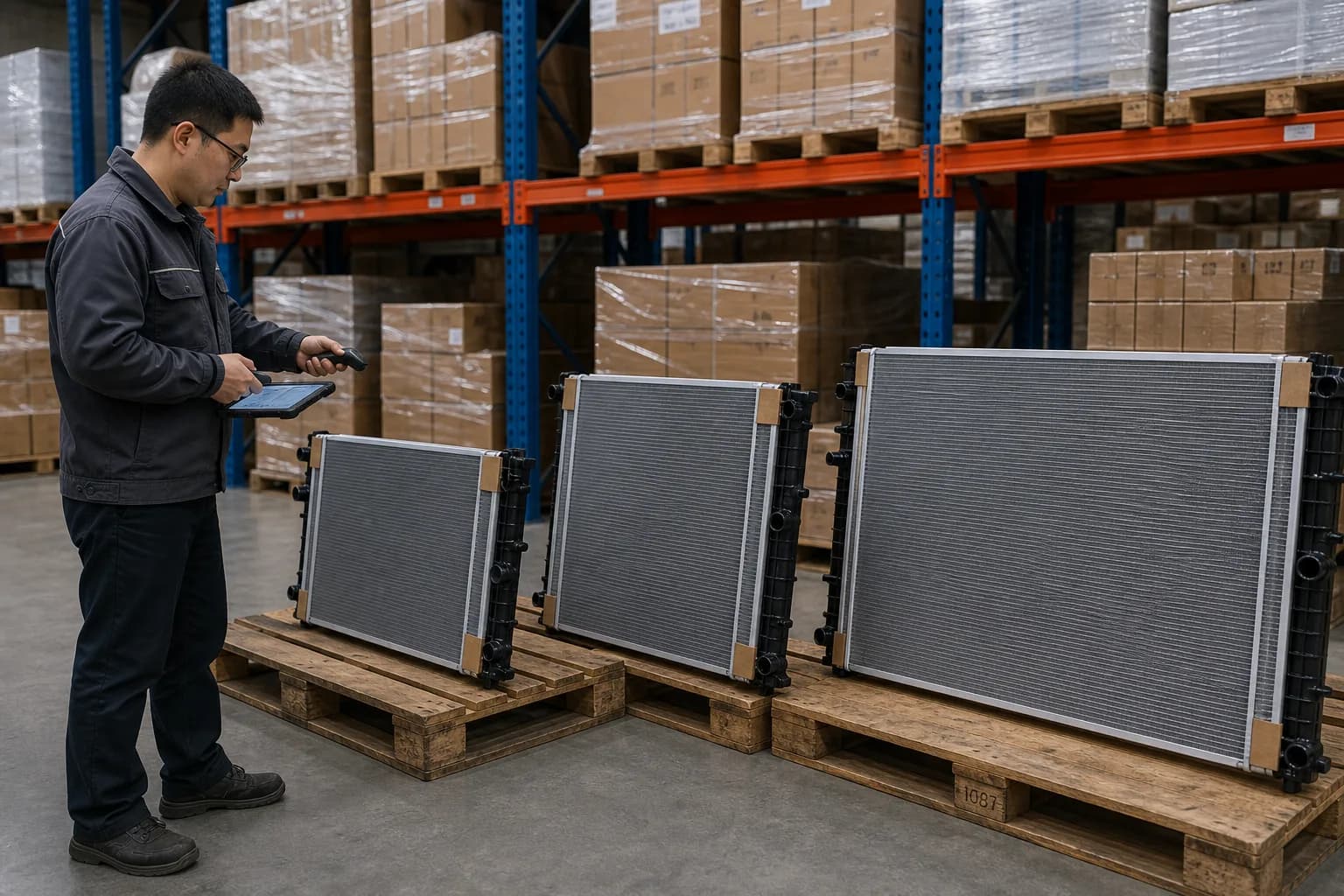
Variant check before price
The useful first step is confirming radiator and condenser variants before a mixed list is flattened into one generic cooling request.
System hub
Source 4x4 cooling parts such as radiators, condensers, intercoolers, and fan assemblies with OE checks, variant control, and export-ready packing support.
A focused entry page for buyers who need heat-management parts and fewer fitment mistakes across mixed cooling RFQs.
Quick overview
Use this hub when your RFQ depends on radiator, condenser, intercooler, fan, or overflow-tank fitment and you need a cleaner path from OE cross-check to export quote.
Useful for radiator, condenser, intercooler, and fan-assembly sourcing.
Built around OE checks, transmission-sensitive fitment, and fin-protection packing.
Optimized for importers and workshops comparing supplier discipline, not retail pricing.
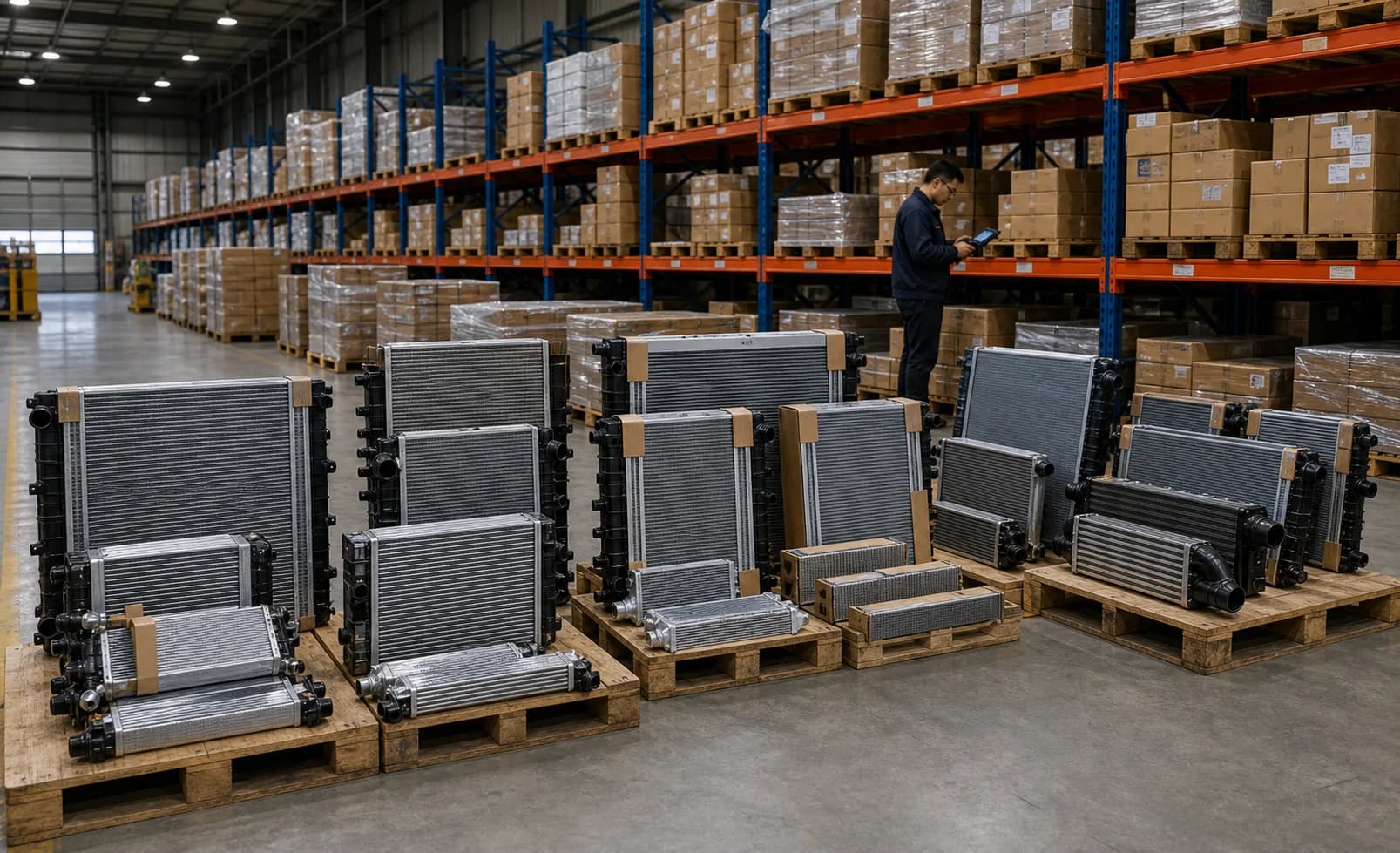
Built for buyers checking radiator, condenser, and intercooler fit before they lock the RFQ.
Core demand
Radiators, condensers, intercoolers, fan assemblies
Risk points
AT or MT variants, core thickness, fin protection, carton crush
RFQ inputs
OE, model year, transmission note, market, quantity plan
Cooling notes
Cooling requests look simple until the fitment details start to matter. Radiators, condensers, intercoolers, and fan assemblies often break down by transmission, hose direction, core thickness, or bracket layout. Buyers who send only a model name usually create the exact revision loop they want to avoid.
The cleaner route is to start with OE, add the transmission note, and separate fragile cooling units from denser add-on hardware before freight is discussed. That makes it easier to quote the real carton mix and reduces the chance of preventable fin damage or wrong-variant claims after arrival.
Related guides
Proof assets
Cooling RFQs move faster when the supplier can show variant control, QC evidence, and realistic packing logic for fin-sensitive parts.
The useful first step is confirming radiator and condenser variants before a mixed list is flattened into one generic cooling request.
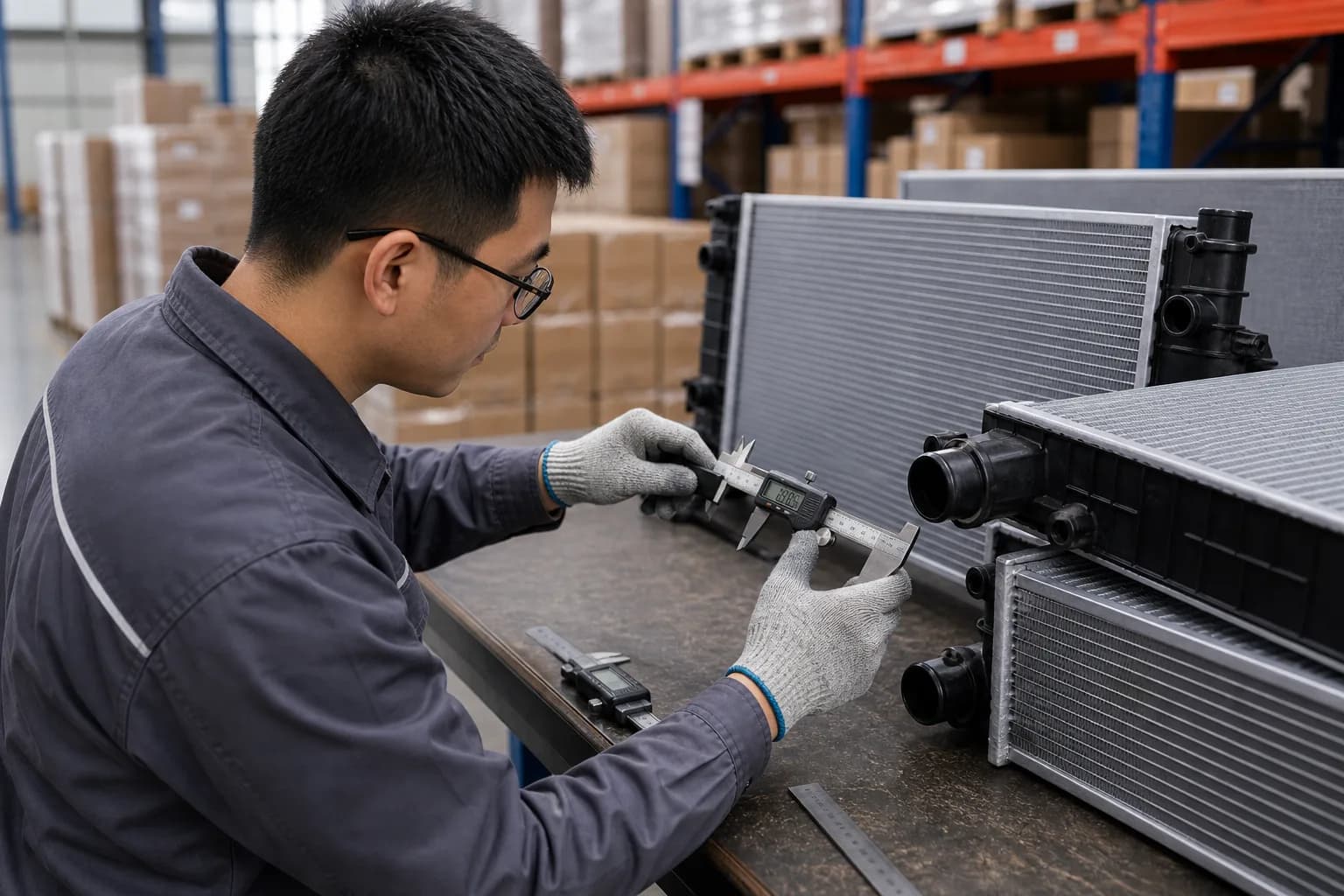
Buyers usually want evidence on core condition, bracket alignment, and fitting layout before the shipment plan is approved.
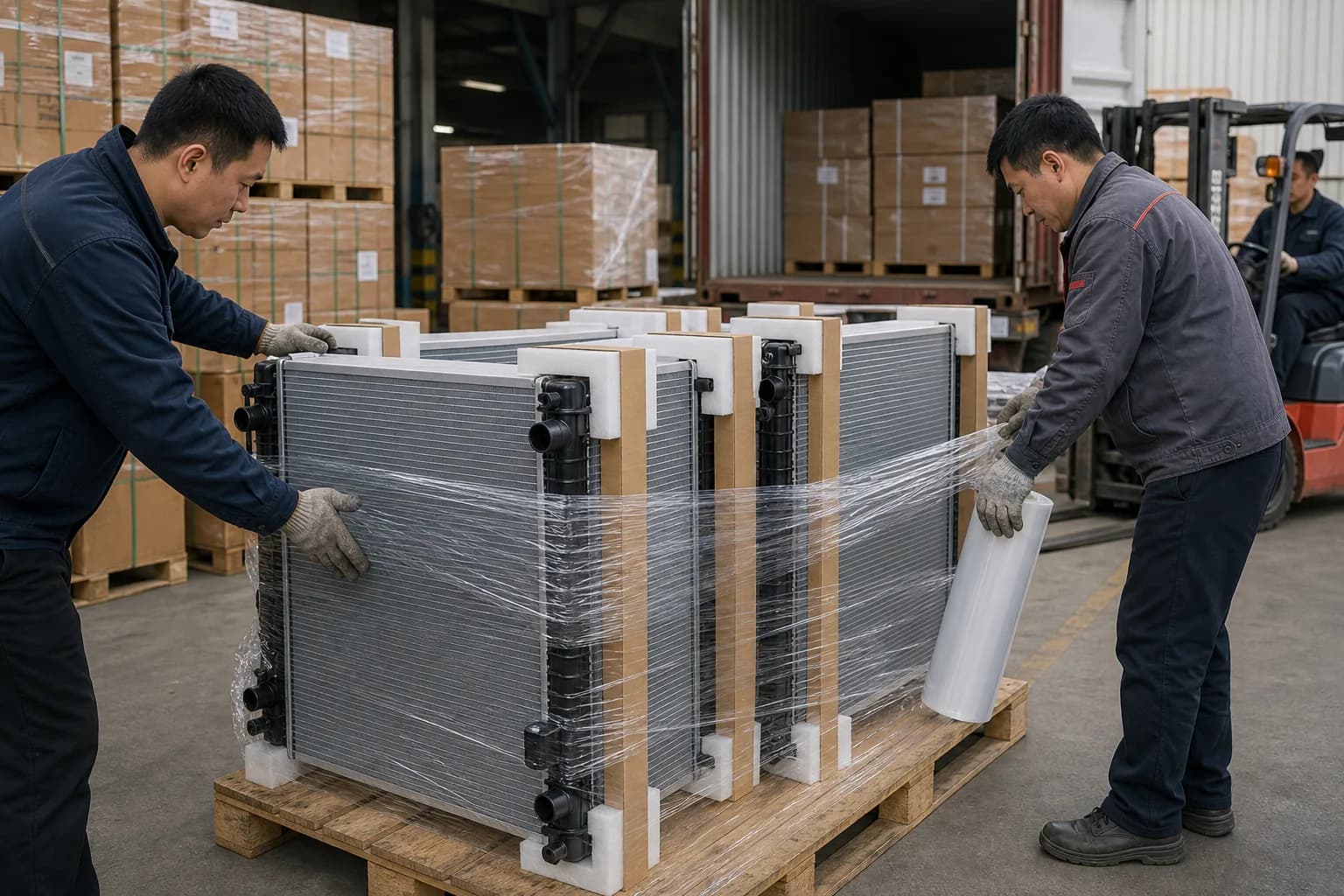
Fin-sensitive parts need a different carton and pallet plan from dense cooling hardware if the order is going to ship cleanly.
Cooling planning
These are planning bands for mixed cooling RFQs, not public list prices.
| Cooling family | Typical range | Planning note |
|---|---|---|
| Radiators | USD 32-86 / pc | Lock transmission note and hose layout first. |
| Condensers | USD 27-72 / pc | Fin protection and bracket version matter. |
| Intercoolers | USD 38-98 / pc | Use OE and core size before comparing price. |
| Fan assemblies and tanks | USD 11-64 / pc | Works best when grouped away from fragile cores. |
Shipment planning
Cooling timing depends on the carton mix and how much fragile core protection the order requires.
| Scenario | Air sample | Sea replenishment |
|---|---|---|
| Pilot radiator order | 4-7 days | 18-28 days |
| Mixed radiator and condenser RFQ | 5-8 days | 22-32 days |
| Intercooler-focused replenishment | 5-7 days | 20-30 days |
| Cooling with dense add-on hardware | 6-9 days | 24-36 days |
Workflow
Cooling RFQs should begin with OE, model year, and whether the part belongs to AT or MT fitment.
Confirm core thickness, hose direction, bracket layout, and any market-specific fitting differences.
Keep fragile cooling units separate from fans, caps, tanks, and other denser hardware when the quote is assembled.
Before shipment, verify core condition, carton protection, pallet logic, and route readiness for the final mix.
Buyer cases
The buyer had the right models but missed the transmission note. The quote cleaned up only after the radiator list was separated by AT and MT variants.
The RFQ looked compact, but the useful change was splitting fin-sensitive condensers from smaller add-on pieces before freight was estimated.
The pilot order was acceptable, but the repeat cycle depended on proving core condition and pallet stability before volume was raised.
Featured OE links
Priority systems
The inputs that most reliably accelerate 4x4 cooling part quoting at JIAWEI are OE number, model and year, transmission type (manual or automatic, since intercooler and radiator specifications differ by transmission), and whether the order is a pilot purchase or repeat replenishment. Cooling system parts — radiators, intercoolers, condensers, and fans — have significant specification variation across model years and transmission variants on platforms like the L200 and Hilux; OE-number quoting eliminates the ambiguity that causes the most common cooling part fitment mismatches. Complete RFQs with OE number and transmission detail are typically priced and returned within 24 hours.
Yes — JIAWEI regularly processes mixed cooling RFQs combining radiators, intercoolers, condensers, and auxiliary cooling components across Mitsubishi and Toyota model lines in a single export order. Cooling parts vary in carton size and weight; JIAWEI reviews carton profiles and packing stability for mixed cooling orders before confirming, to ensure radiator cores and intercooler tubes are protected against freight damage during sea transit. Mixed cooling orders covering both L200 and Hilux demand are common for distributors serving multi-platform workshops, and consolidated shipments reduce per-unit freight cost compared to separate orders per model.