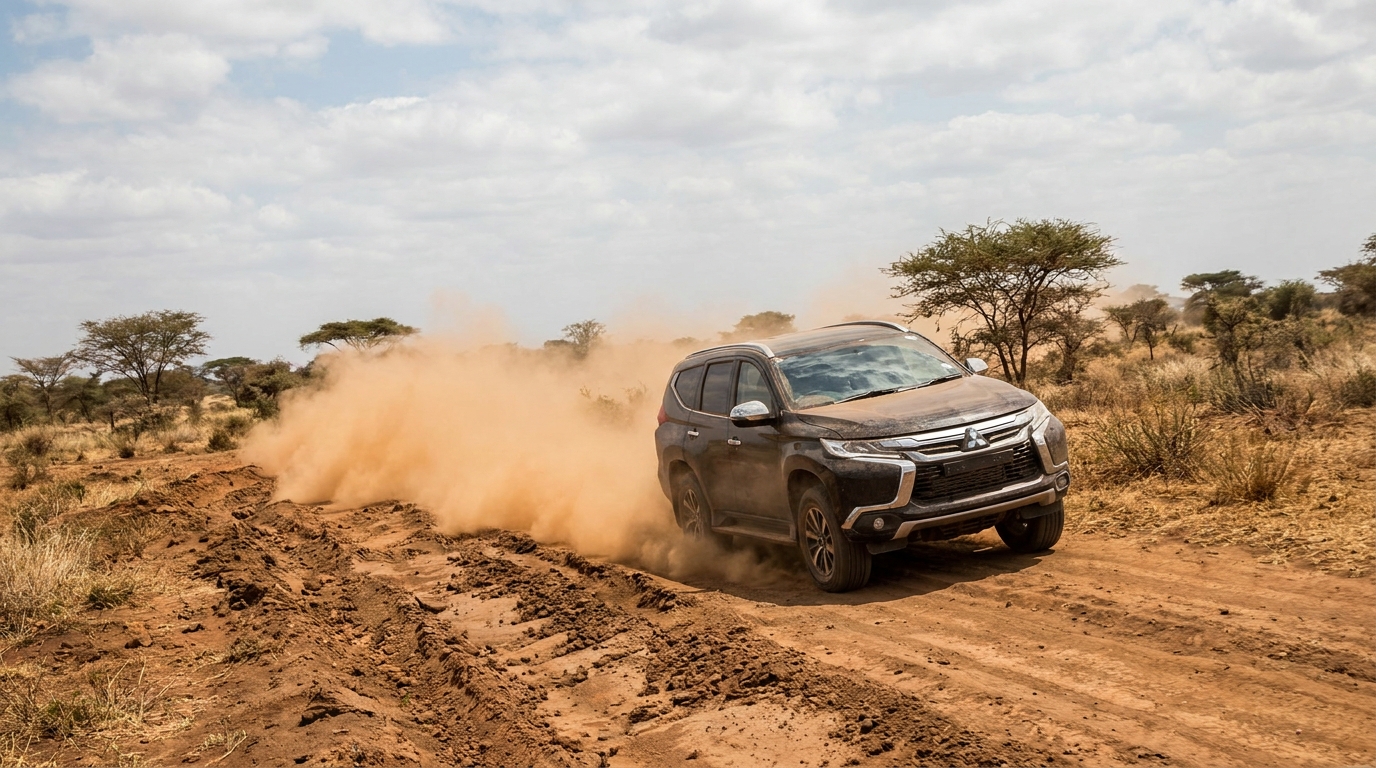
Pajero Sport control arms are not glamorous inventory, but they are exactly the kind of SKU that keeps workshops loyal. When bushings crack, ball joints loosen, or a stamped arm bends after rough-road use, the customer wants a part that fits the first time and does not create a noise complaint two months later.
This Pajero Sport control arm sourcing guide gives importers and distributors a practical framework: OE references to verify, material differences, bushing and ball joint checks, and the supplier questions that separate a durable chassis part from a cheap lookalike.
Why Pajero Sport Control Arms Need Extra Fitment Discipline
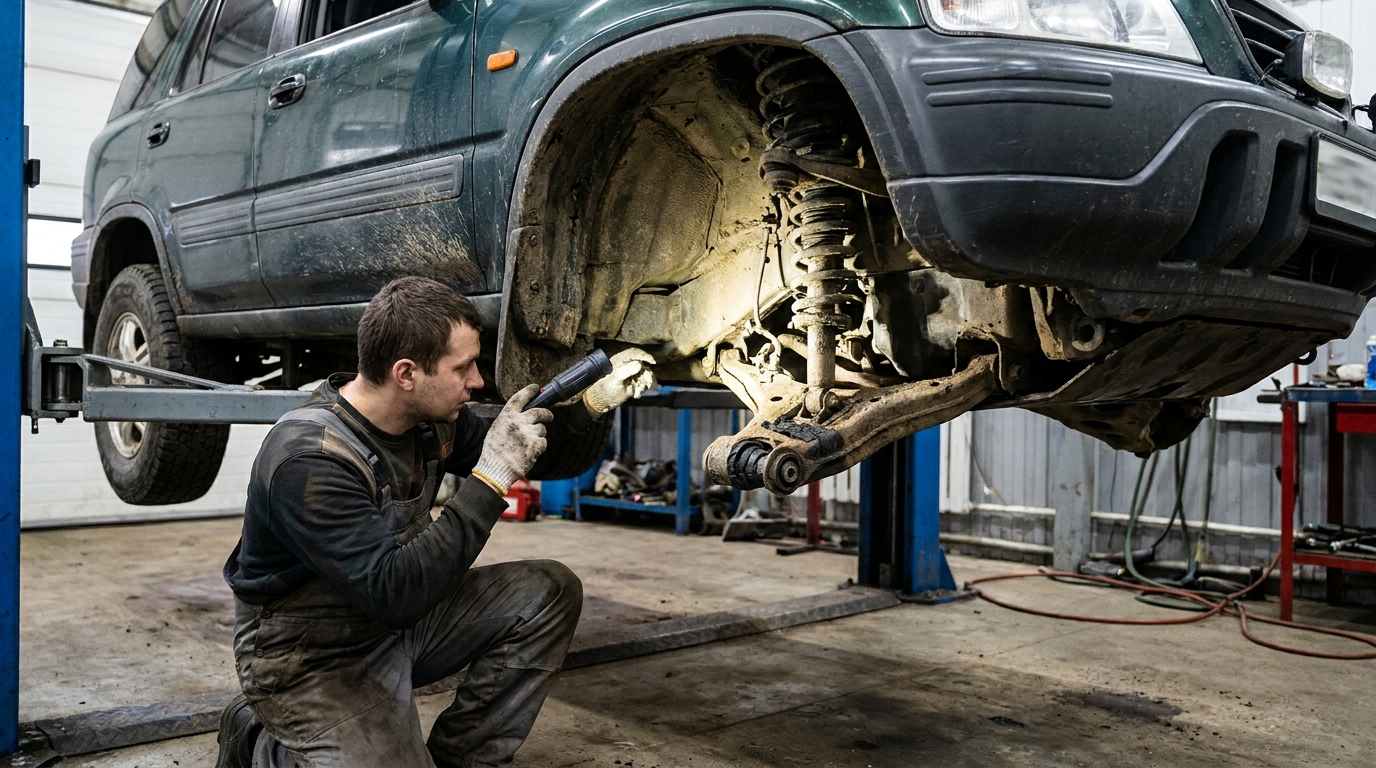
Pajero Sport control arm demand is driven by rough-road use, overloaded vehicles, worn bushings, and ball joint play. The part looks simple, but geometry, bushing hardness, welding, coating, and taper dimensions decide whether the vehicle aligns correctly after installation.
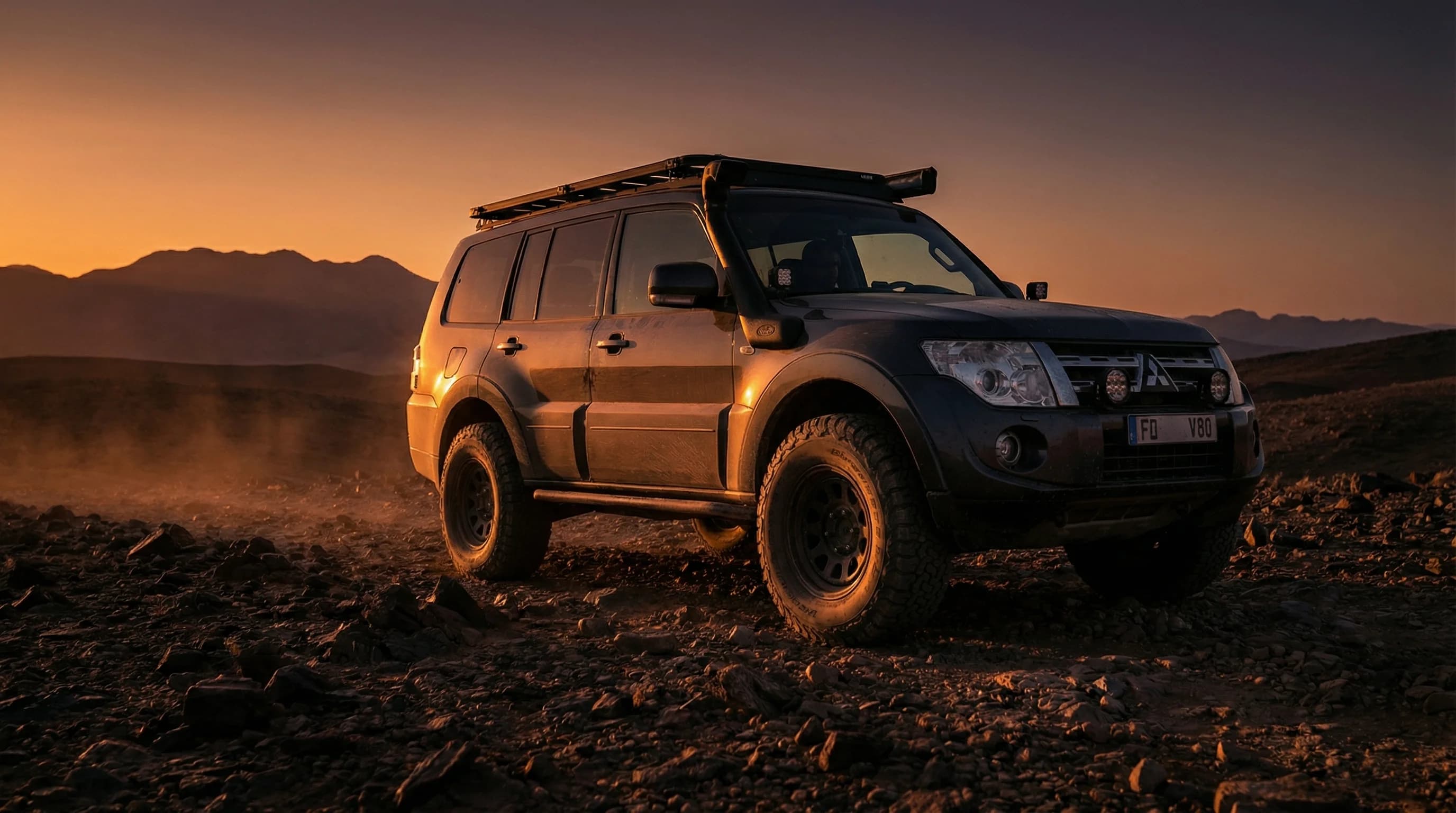
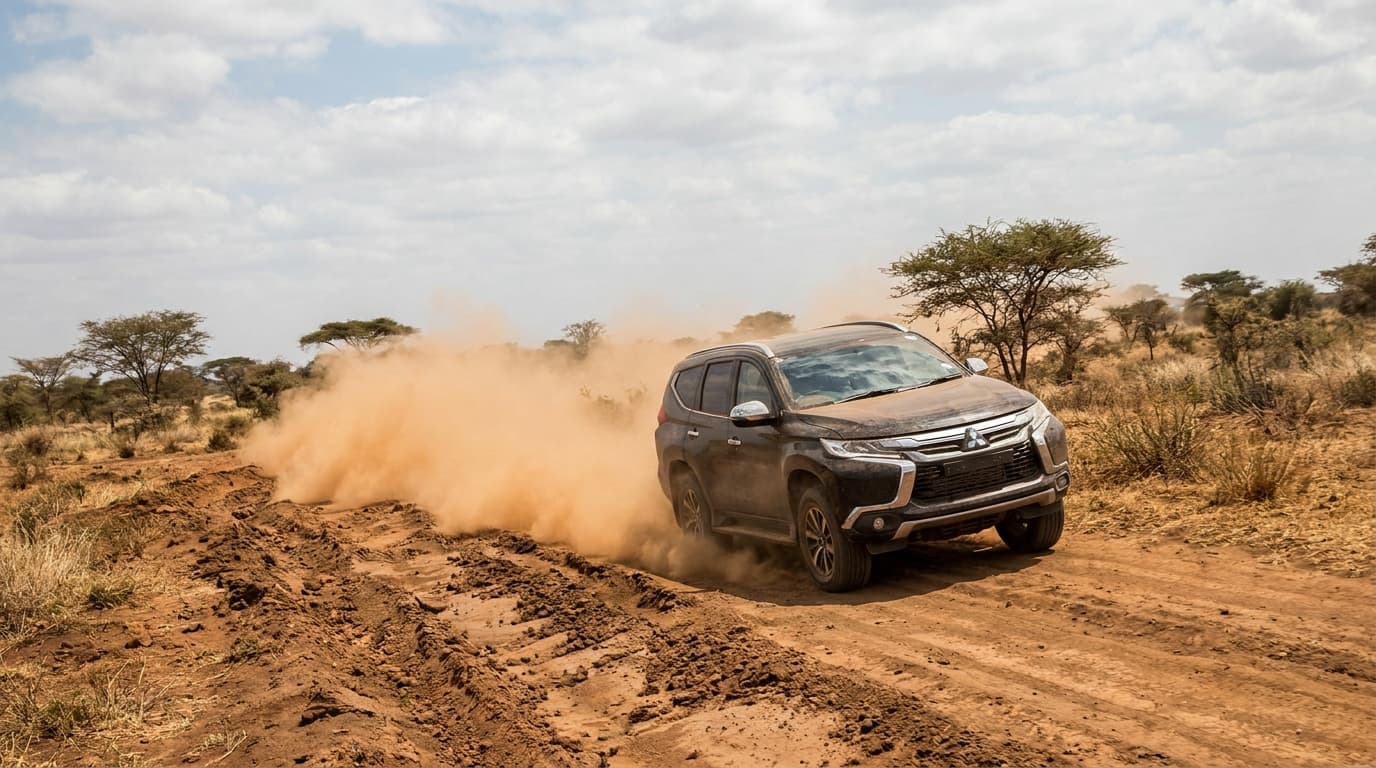
In Latin America, Africa, and Southeast Asia, Pajero Sport and Montero Sport vehicles often work as family SUVs during the week and load carriers on bad roads at the weekend. That mixed use punishes suspension parts. The buyer who only compares the arm shape misses the expensive details.
A practical example: a bushing pressed 2–3 mm too shallow creates lateral play that does not fail immediately. The customer drives 2,000–3,000 km, hears a knock, and returns the part. The arm itself is intact, but the workshop labor, warranty cost, and customer trust are already lost. That failure mode is almost entirely preventable at the sample approval stage—which is why this guide covers inspection steps in detail before price discussion.
OE Cross-Reference: Pajero Sport Control Arms and Related Chassis Parts
Control arm sourcing should begin with OE number and chassis code. Mitsubishi Pajero Sport applications differ by generation and market name, so the safest RFQ includes OE number, side, upper/lower position, chassis code, and whether the buyer needs the arm alone or a pre-assembled arm with bushings and ball joint. For the KG/KH generation (2008–2015), the core lower arm references are 4013A009 (driver side) and 4013A010 (passenger side); 4010A147 covers the upper arm but shares platform overlap with Triton/L200 applications—geometry must be confirmed before listing across models.
| OE Number | Generation | Chassis Code | Engine | Years | Part Type | Notes |
|---|---|---|---|---|---|---|
| 4013A009 [verify against EPC] | Pajero Sport / Montero Sport | KG/KH market-dependent | 2.5/3.2 diesel variants | 2008-2015 | Front lower control arm | Check side, ball joint taper, bushing shell OD, and stabilizer link bracket position. |
| 4013A010 [verify against EPC] | Pajero Sport / Montero Sport | KG/KH market-dependent | 2.5/3.2 diesel variants | 2008-2015 | Opposite-side lower control arm | Often quoted as LH/RH pair; avoid mixing side labels between LHD/RHD catalogs. |
| 4010A147 [verify against EPC] | Pajero Sport / Triton platform overlap | KB/KG/KH depending market | Diesel variants | 2006-2015 | Upper control arm | Some suppliers cross to Triton/L200 applications; confirm actual geometry. |
| MB860829 [verify against EPC] | Pajero Sport related chassis service | Regional applications | Various | Market-dependent | Front suspension ball joint | Useful related SKU for workshops that service arms and joints separately. |
Have a mixed Pajero Sport chassis list? Send the OE numbers and side/position notes through JIAWEI 4x4 contact. We will flag likely fitment conflicts before sample approval.
OEM, OE-Matched, and Budget Control Arms Compared
The right tier depends on the customer base. Fleet and workshop customers need stable geometry, bushing life, and coating quality. Retail customers may be more price-sensitive, but even budget control arms must hold alignment and ball joint preload.
| Tier | Arm Body | Bushing and Ball Joint | QC Focus | Certifications | Best Fit |
|---|---|---|---|---|---|
| OEM genuine | OE validated stamping/casting and coating | OE rubber compound and joint preload | Full OE quality system | IATF 16949 at manufacturing plant level | Dealer repair and high-value fleet customers |
| OE-matched aftermarket | Stamped steel or forged/cast design matched to OE geometry | Rubber hardness and ball pin taper controlled by sample spec | Fixture check, bushing press depth, torque and coating inspection | ISO 9001; IATF 16949 at select factories—verify per supplier | Professional distributors and workshops |
| Budget aftermarket | Lower-cost stamping and coating | Unspecified rubber grade and grease sealing | Basic visual and dimensional checks | Basic QC; certification status varies—request documentation before ordering | Price-sensitive channels where warranty expectations are lower |
For rubber bushings, buyers often request Shore A hardness reporting as a comparative control, using ASTM D2240 as the common test-method reference. For coating, salt spray expectations should be agreed before ordering rather than assumed (per ISO 9227 salt spray test methodology).
What to Inspect Before Ordering MOQ
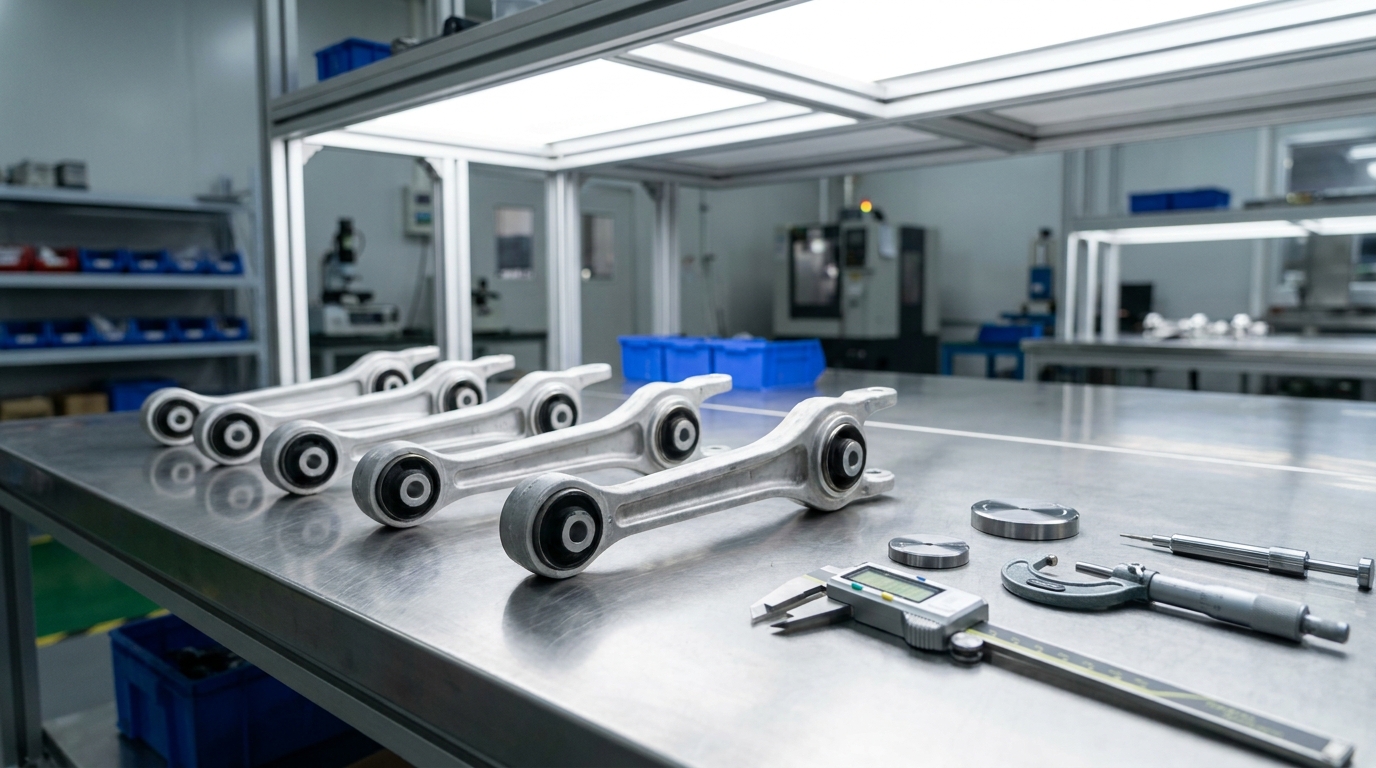
A good control arm sample inspection is mechanical, not cosmetic. Paint finish matters, but the higher-risk areas are geometry, bushing position, ball joint taper, weld consistency, thread quality, and whether the supplied hardware matches local workshop expectations.
- Fixture fit. Ask whether the supplier checks the arm in a fixture, not only with hand calipers.
- Bushing press depth. Uneven press depth causes noise, premature wear, or installation resistance.
- Ball joint articulation. Confirm stud taper, boot material, grease fill, and nut/thread quality.
- Coating coverage. Inspect edges, weld zones, and inner surfaces where rust starts first.
- Side marking and carton labels. LH/RH mistakes are expensive when customers buy pairs.
Regional Demand and Inventory Mix
Pajero Sport control arms move best where road conditions punish suspension and where KG/KH generation Pajero Sport and Montero Sport vehicles (typically 2008–2015) remain in active commercial service. Latin America, Africa, and Southeast Asia are natural markets because workshops repair these vehicles instead of replacing them when wear appears.
For distributors in Peru, Colombia, Kenya, and the Philippines, a practical inventory mix includes lower control arms, upper control arms, ball joints, stabilizer links, and bushings. The reason is simple: workshops often diagnose several front-end parts at once. If you stock only one arm, you may lose the basket.
In Peru and Colombia, the Montero Sport and Pajero Sport share similar workshop demand patterns as the Toyota Hilux suspension market—fleet buyers, rural road operators, and mining-adjacent services that replace parts in sets rather than singles. In Kenya and the Philippines, KG/KH generation vehicles (2008–2015) dominate the aftermarket because resale values stay high and owners maintain rather than replace. For distributors entering these markets, the entry SKU is almost always the front lower arm pair; upper arms and stabilizer links follow once the supplier relationship is established.
Sourcing Red Flags That Create Warranty Noise
Most control arm failures are not dramatic breakages. They are noise, alignment drift, cracked bushings, torn boots, and customer distrust. The supplier risk is highest when the quote has no geometry data, no bushing specification, and no clear side/position mapping.
- Supplier cannot identify upper vs lower or LH vs RH from the OE list.
- No bushing hardness range or ball joint preload discussion.
- No fixture-check photos for first batch approval.
- Thin coating on welds and edges.
- Mixed packaging where heavy arms damage rubber boots in transit.
Sample Approval Workflow for Control Arms
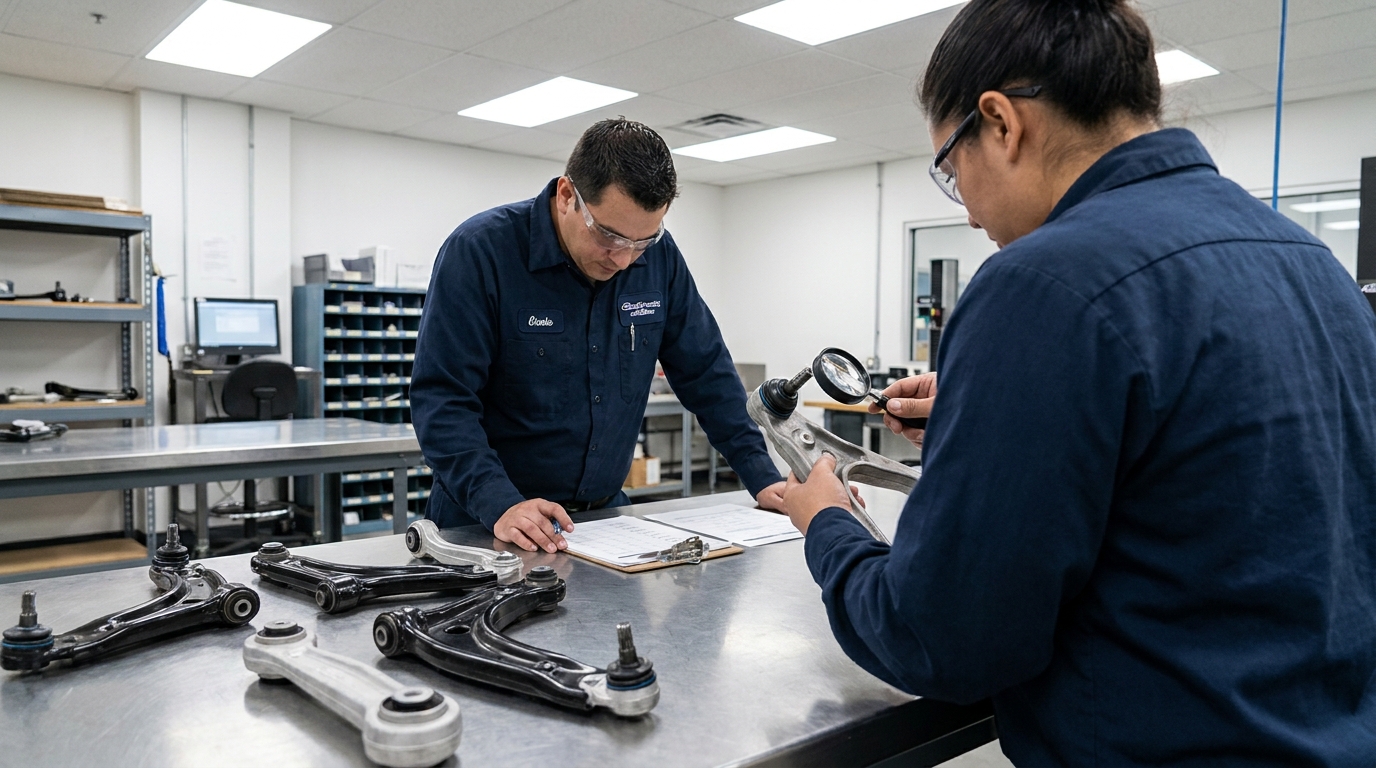
A control arm sample should go through a small approval workflow before the buyer commits to MOQ. The workflow does not need to be complicated, but it should be written down so the supplier, importer, and workshop are checking the same thing.
Start with a catalog match against OE number and side. Then compare the sample against an original arm or a trusted previous batch. After that, check fixture fit, bushing orientation, ball joint movement, thread quality, coating, and carton protection. If the market has rough-road warranty history, install one sample on a local vehicle and inspect again after a short road test.
| Approval Step | Pass Criteria | Common Failure |
|---|---|---|
| Catalog match | OE, side, upper/lower position, and chassis all agree | Supplier quotes Triton/L200 overlap without checking geometry |
| Fixture or sample comparison | Mounting holes, bracket angle, and bushing seats align | Arm looks similar but changes caster/camber after installation |
| Bushing inspection | Correct press depth, rubber finish, and sleeve alignment | Noise complaint after short use |
| Ball joint inspection | Stable preload, clean thread, sealed boot, correct nut | Loose feel, torn boot, or mismatched taper |
| Packaging check | Boots and bushings protected from arm weight | Rubber damaged before the part reaches the workshop |
For a first order, ask the supplier to keep a retained sample from the approved batch. If a warranty issue appears later, both sides can compare the returned part against the retained sample instead of arguing from memory.
How to Position Control Arms in a Distributor Catalog
Control arms sell better when they are grouped with the parts workshops replace at the same time. A Pajero Sport buyer looking for a lower arm may also need ball joints, stabilizer links, tie rod ends, shock absorbers, or bushings. Treat the suspension page as a repair basket, not a single-SKU page.
In a B2B catalog, show side, position, OE number, chassis, and whether the arm is complete. Add plain notes such as "with ball joint" or "bushing included" because non-native English buyers scan tables quickly. If your Spanish catalog uses "brazo inferior" and "brazo superior," keep the same order and side labels as the English version to prevent quoting mistakes.
Product pages that list OE number, side, position, and whether the arm comes complete or without bushings reduce pre-sale questions significantly. In markets where buyers are non-native English speakers, adding a brief Spanish note—"brazo inferior izquierdo" or "brazo superior completo"—on the same page prevents side and position errors at order entry. For bulk buyers, cross-reference the arm listing to related Pajero Sport parts and suspension products so workshops shopping for one component can complete the basket in a single session. Every step in this Pajero Sport control arm sourcing guide—from OE verification to sample approval to catalog structure—connects back to the same goal: fewer returns and more repeat orders.
Frequently Asked Questions
Should distributors buy complete Pajero Sport control arms or separate bushings?
Complete arms reduce workshop labor and fitment risk, especially for customers without press tools. Separate bushings work when the market is very price-sensitive and workshops are comfortable rebuilding arms.
What is the biggest fitment mistake when sourcing Pajero Sport control arms?
Approving by model name only. Pajero Sport, Montero Sport, Triton, and L200 platform overlap can confuse catalogs, so confirm OE, side, position, and chassis.
What is the minimum order quantity for Pajero Sport control arms?
MOQ varies by reference and supplier stock status. Front lower arms (4013A009 and 4013A010) are commonly stocked and easier to mix with related suspension parts. Upper arms and less common references may have a higher MOQ or require advance notice. Confirm with your supplier after sample approval, not before.
What packaging should I request?
Ask for separated arms, protected ball joint boots, clear LH/RH labels, and carton strength suitable for export handling. Heavy suspension parts should not crush rubber components in the same carton.
How should I handle Pajero Sport control arm warranty claims?
Ask for photos of installation, vehicle application, failed area, and mileage after installation. Compare the returned part with the retained sample and batch record before deciding whether the issue is product, fitment, or installation related.
Can one control arm fit both Pajero Sport and L200/Triton?
Some platform parts overlap, but do not use platform overlap as proof. Confirm OE number, geometry, side, and position before listing one arm across multiple models.
Send Your Pajero Sport Control Arm RFQ
Send your Pajero Sport control arm OE numbers, required side and position, and target market through JIAWEI 4x4 contact. You can also review Pajero Sport parts, visit the Pajero Sport wholesale page, or browse suspension parts for related SKUs.
Sources & Methodology
- OE part numbers: Mitsubishi EPC-style references and China aftermarket catalog cross-checks; numbers marked [verify against EPC] require buyer-side confirmation.
- Technical standards: ASTM D2240 for rubber hardness reference; ISO 9227 for salt spray test methodology; ISO 9001 process-control principles.
- Market intelligence: JIAWEI 4x4 distributor and workshop feedback across Latin America, Africa, and Southeast Asia, 2023-2026.
- Duplicate check: jiaweiparts.com blog and sitemap reviewed on April 29, 2026; no existing article used this specific Pajero Sport control arm sourcing angle.
This article was last reviewed on April 29, 2026. Fitment data can change by market and production date. If you notice an inaccuracy, please let us know.