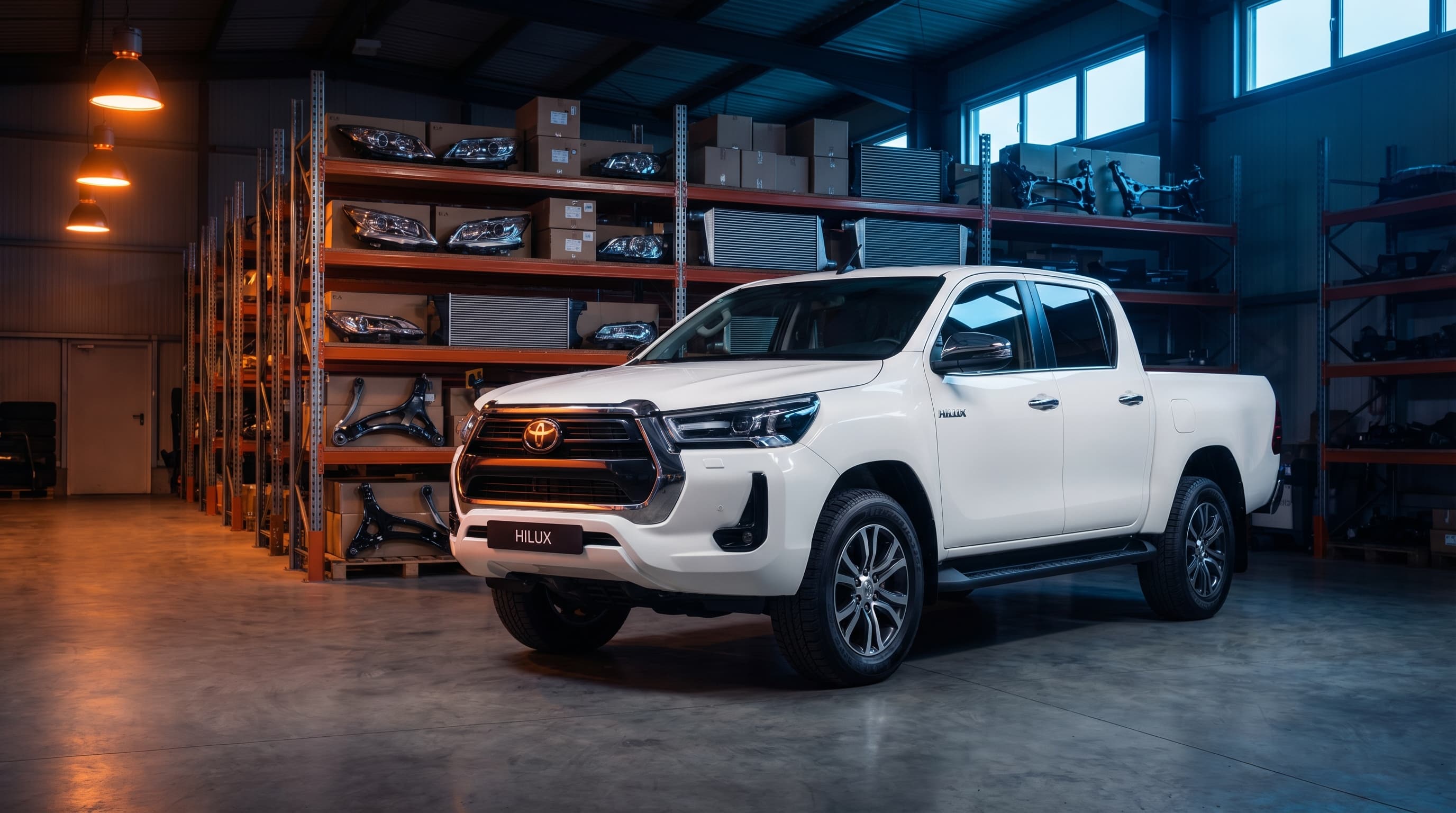

Land Cruiser radiator demand is not driven by casual replacement. It is driven by heat, towing, mining routes, long idle hours, and workshops that cannot afford a second comeback. For importers, the useful question is not "which radiator is cheapest?" It is which specification survives your market without creating warranty noise.
This Land Cruiser radiator sourcing guide is written for buyers who stock J100 and J200 cooling parts, quote by OE number, and need a clean way to compare genuine, OE-matched, and budget supply before committing to MOQ.
What Drives Land Cruiser Radiator Replacement Demand?
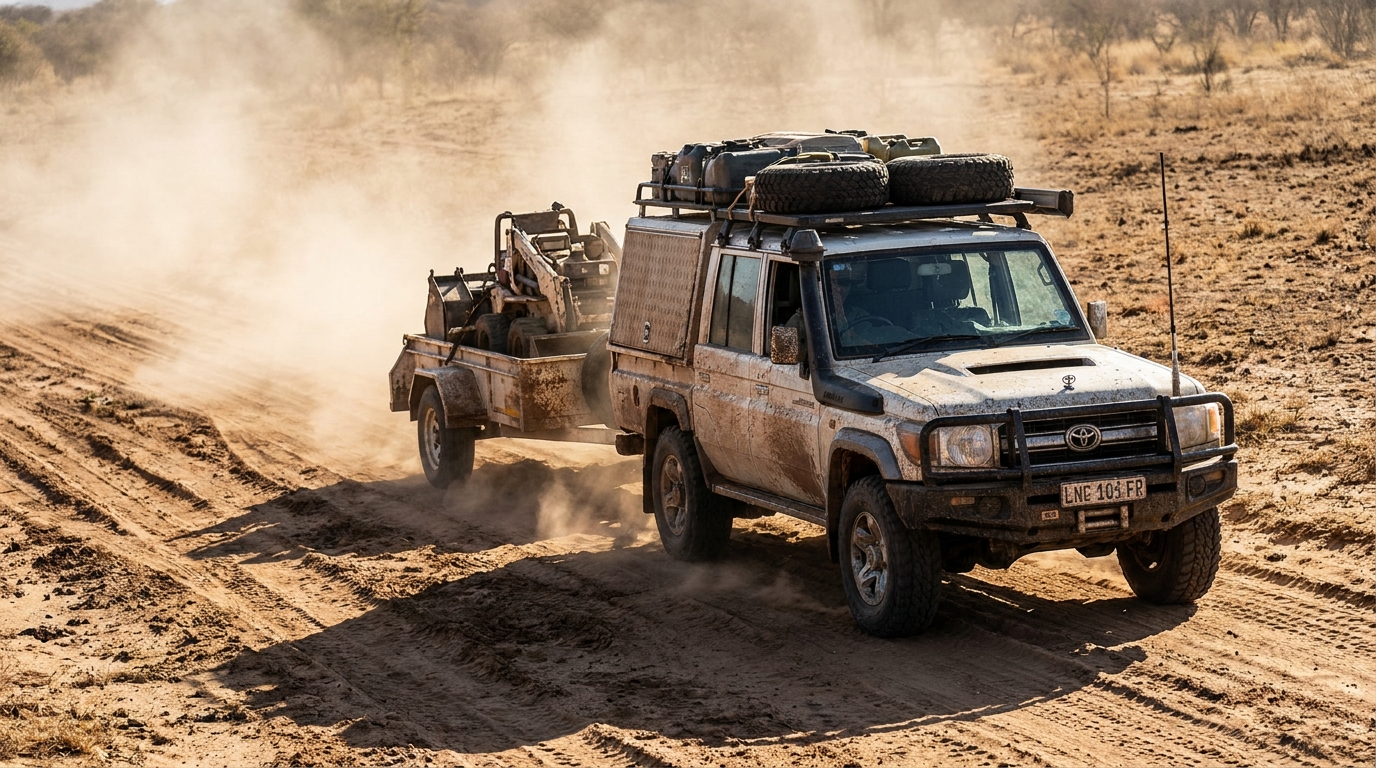
Radiator demand on Land Cruiser models comes from sustained thermal load rather than one single weak part. Fleet vehicles in hot climates, towing applications, dusty off-road use, and older J100/J200 units create repeat demand because plastic tanks, seams, fins, caps, and hose necks age faster under heat cycling.
In the Middle East, Africa, and parts of Latin America, Land Cruiser vehicles often work as fleet, security, construction, mining, and rural transport units. That changes the buying logic. A workshop may accept a budget trim piece, but it is far less forgiving on cooling failure. One overheating event can damage an engine that costs many times more than the radiator.
For wholesale buyers, this means radiator SKUs should be treated as risk-managed inventory. Confirm chassis, engine, transmission, inlet/outlet position, core thickness, cap neck, fan shroud mounts, and packaging strength before placing a repeat order.
OE Cross-Reference: Land Cruiser Radiators by Generation
Use OE numbers as the starting point, not the final proof. Toyota Land Cruiser radiator fitment can vary by market, engine, transmission, and production date, so every bulk order should be checked against EPC data, VIN samples, or the buyer's existing OE list before production. The most active references in wholesale supply are 16400-50340 for J100 (UZJ100/HDJ100, 1998–2007) and 16400-51020 for J200 fleet applications (URJ200/VDJ200, 2007–2021)—both marked [verify against EPC] as shown in the table below. For active stock status and OE cross-reference, see our Land Cruiser wholesale page or use the OE number lookup before committing to production.
| OE Number | Generation | Chassis Code | Engine | Years | Core Type | Notes |
|---|---|---|---|---|---|---|
| 16400-60617 [verify against EPC] | Land Cruiser Prado / LC platform coverage | J120/J150 market-dependent | Diesel/gasoline variants | Market-dependent | Aluminum core, plastic tank | Common aftermarket reference in China supply; verify neck angle and mounting points. |
| 16400-50340 [verify against EPC] | Land Cruiser 100 | UZJ100/HDJ100 | 4.7L gasoline / diesel variants | 1998-2007 | Aluminum core, plastic tank | Transmission cooler fittings can vary. Do not approve by photo only. |
| 16400-51020 [verify against EPC] | Land Cruiser 200 | URJ200/VDJ200 | 4.5D / 4.7 / 5.7 market variants | 2007-2021 | High-capacity aluminum core | J200 fleet buyers often ask for stronger packaging because cartons move through long inland routes. |
| 16400-66070 [verify against EPC] | Land Cruiser 80/100 regional overlap | HDJ/FZJ market-dependent | Diesel/gasoline variants | 1990s-2000s | Aluminum or copper/brass depending supplier | Older chassis need stricter sample matching because local engine swaps are common. |
Need a Land Cruiser radiator OE list checked? Send the OE numbers, chassis code, and sample photos through the quote form. We can confirm availability and fitment risk before you issue a purchase order.
OEM, OE-Matched, and Budget: How the Tiers Compare
The useful comparison is not brand name alone. For Land Cruiser radiator sourcing, buyers should compare tank material, core thickness, fin density, brazing quality, pressure testing, cooler fittings, and carton strength. A lower unit cost can disappear quickly if the part leaks after inland transport.
| Tier | Material and Build | Testing | Best Fit | Tradeoff |
|---|---|---|---|---|
| OEM genuine | OE supplier specification, validated tank and core design | Factory validation and OE quality system | Dealer repair, insurance, high-value fleet | Premium pricing tier and slower availability in GCC, Australian, and Japanese export markets compared to China aftermarket supply. |
| OE-matched aftermarket | Aluminum core, PA66-GF plastic tanks, TIG/brazed construction depending design | Leak and pressure test, dimensional check, carton drop check requested by buyer | Wholesale distributors balancing warranty risk and margin | Requires disciplined supplier verification, especially for cooler fitting and fan shroud points. |
| Budget aftermarket | Thinner core options, lower-cost tank resin, simplified packaging | Basic leak test; documentation varies | Price-sensitive retail channels | Higher risk in hot regions and fleet use. We do not recommend it for mining or towing customers. |
For pressure testing, 1.1–1.5 bar is a widely used aftermarket radiator leak-test reference—aligned with typical Toyota cap-relief specifications and common supplier QC practice—though final acceptance should be agreed in writing against the cap rating and vehicle application. If a supplier cannot show a test fixture, test pressure, and sample report format, treat the quote as incomplete.
Five Checks Before You Approve a Sample
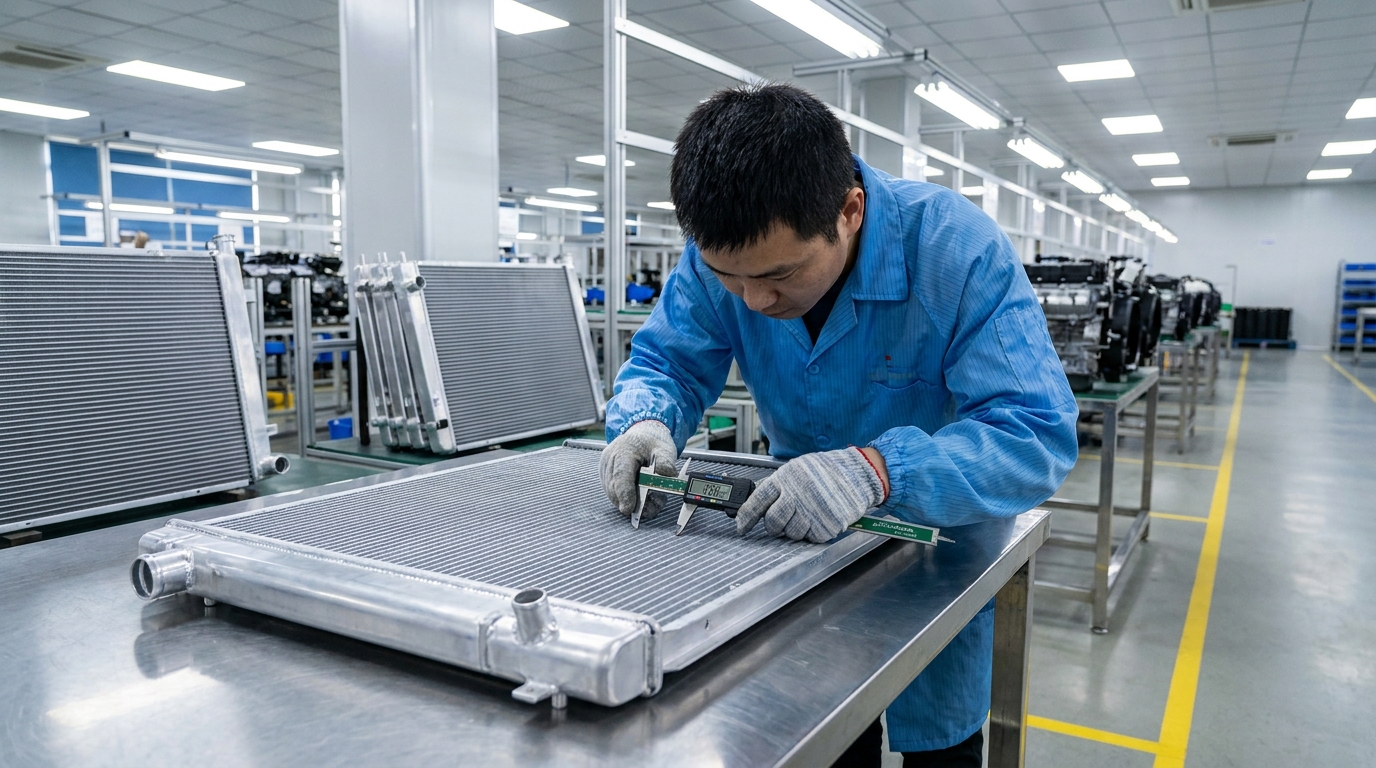
A radiator sample should be checked like a fitment part and a logistics part. Even a leak-free radiator can fail commercially if the hose neck is off by a few millimeters, the shroud hole is wrong, or the carton cannot survive a mixed-container route.
- Confirm OE and VIN context. Ask the buyer for OE number, chassis code, engine, transmission, and at least one real sample photo.
- Measure core and tank dimensions. Record core height, width, thickness, inlet/outlet OD, neck angle, and mounting tabs.
- Check cooler fittings. Automatic transmission cooler ports are a common mismatch area on J100/J200 applications.
- Request test evidence. Leak test, pressure hold time, cap seat inspection, and visual brazing check should be documented.
- Review packaging. Radiators need corner protection, foam spacing, and carton strength because fins are easy to crush during transshipment.
Regional Demand: Where This Part Moves
Land Cruiser radiator demand is strongest where vehicles work long hours under heat and load. Middle East fleet buyers, African mining and NGO fleets, and Latin American rural or construction operators often prioritize cooling reliability over the lowest quote.
Saudi Arabia, UAE, Oman, Kenya, Tanzania, Chile, and Peru are markets where Land Cruiser parts stay relevant because vehicles remain in commercial service long after newer models arrive. In our export conversations, buyers from these markets usually ask for two things first: OE confirmation and packaging that survives the route.
That is why a good radiator quotation should not be a one-line price. It should include OE cross-reference, core spec, MOQ, lead time, sample policy, carton dimensions, gross weight, and photos of the actual production version.
Wholesale Sourcing Red Flags
The biggest red flags are vague fitment, missing pressure-test information, recycled product photos, and a supplier who cannot explain the difference between J100, J200, and Prado applications. A low price is not automatically bad. A low price with no technical trail is the problem.
- One photo used for multiple OE numbers without dimensional data.
- No statement on tank resin, core thickness, or cooler fittings.
- No pressure-test report or only a generic "100% tested" claim.
- MOQ pushed before sample validation.
- Carton too light for radiator export, especially for mixed-LCL shipment.
A practical supplier will slow the quote down long enough to verify fitment. That can feel inconvenient for a first order, but it is cheaper than a container of almost-right radiators.
How to Build a Safer Land Cruiser Radiator RFQ
A strong RFQ makes the supplier prove fitment and production control before price becomes the only discussion. For Land Cruiser radiators, include the OE number, chassis code, engine, transmission, destination market, target carton requirement, and whether the customer needs private label packaging.
We prefer RFQs that attach three photos: front face, tank side with inlet/outlet, and mounting points. That sounds basic, but it catches many catalog mistakes. If the buyer has a removed original radiator, add core measurement and hose neck OD. The supplier can then compare the request against an actual sample or fixture instead of guessing from a model name.
| RFQ Field | Why It Matters | What to Send |
|---|---|---|
| OE number | Prevents broad model-name matching | Primary OE plus any supersession number from the buyer's catalog |
| Chassis and engine | Separates J100, J200, Prado, diesel, and gasoline applications | VIN prefix, chassis code, engine code, production year |
| Transmission | Cooler fittings may change by automatic/manual setup | AT/MT note and close-up of cooler port area |
| Market and route | Packaging expectations differ for air, LCL, and container shipment | Destination country, Incoterm, carton labeling needs |
If your team buys for several countries, do not force every market into one radiator spec. A distributor serving mining fleets in Peru may need stronger packaging and mid-to-premium cores, while a retail channel in a mild-climate city may accept a lower tier. Segment the order by risk, not by spreadsheet convenience.
Packaging and Shipping Details Buyers Often Miss

Radiator quality can be ruined after production. Crushed fins, bent necks, and cracked plastic tanks often come from poor packaging or mixed loading, not from the radiator line itself. This is why export packaging should be treated as part of the product specification.
For LCL shipments, ask for foam corner protection, inner spacing so the core does not touch the outer carton, and clear "do not stack heavy goods" markings. For full-container orders, confirm pallet pattern and carton compression strength. For air shipment samples, request the same production carton if possible; otherwise the sample may arrive safely while the bulk packaging remains untested.
We learned this the hard way years ago with cooling parts: the best-looking product photos are meaningless if the receiving warehouse has to straighten fins before selling the part. A distributor will remember the damaged cartons longer than the supplier's quoted lead time. If this land cruiser radiator sourcing guide has one operational lesson beyond OE verification, it is that packaging is part of the product specification—not an afterthought.
Frequently Asked Questions
What MOQ should importers expect for Land Cruiser radiators?
MOQ depends on OE number, stock status, and packaging requirement. For active SKUs, mixed orders are usually easier; for less common references, buyers should expect MOQ discussion after sample confirmation.
How do I verify Land Cruiser radiator core dimensions before approving a bulk order?
Record core height, width, and thickness, then measure inlet and outlet OD, neck angle, and mounting tab positions. Compare against a removed original unit or trusted previous batch. Ask the supplier for a dimension sheet and pressure-test record before approving production.
Should I choose plastic tank or all-aluminum radiator?
Most OE-style replacement demand uses aluminum core with plastic tanks. All-aluminum options may suit performance or severe-duty channels, but they are not automatically better for every wholesale customer.
What documents should I request for a Land Cruiser radiator import?
Request product photos, packing list with carton dimensions and gross weight, leak-test records showing test pressure and hold time, material notes for tank resin and core spec, and commercial documents. If your market requires certificates of conformity, country-of-origin documentation, or third-party lab test reports, confirm those requirements before production begins.
How do I reduce fitment returns on Land Cruiser radiators?
Quote by OE number plus chassis, engine, transmission, and photos. Do not approve a radiator by model name alone, especially for Land Cruiser applications crossing multiple regions.
What lead time should I plan for when sourcing Land Cruiser radiators?
For stocked references, dispatch after payment and label confirmation typically takes 3 to 7 working days. For custom carton artwork, private label, or production references, plan an additional 15 to 30 days for sample approval, carton design sign-off, leak-test documentation, and freight booking.
Can one radiator cover several Land Cruiser markets?
Sometimes, but do not assume it. Market-specific engines, transmission fittings, and local replacement habits can split what looks like one SKU into several practical buying decisions. Always verify by OE number and chassis rather than model name.
Send Your Land Cruiser Radiator RFQ
If you are sourcing Land Cruiser radiators for wholesale distribution, send your OE list, target market, and expected monthly quantity through JIAWEI 4x4 contact. For broader coverage, you can also browse 4x4 cooling parts, review our Land Cruiser parts hub, or check the Land Cruiser wholesale sourcing page for active stock information.
Sources & Methodology
- OE part numbers: Toyota EPC-style references and China aftermarket catalog cross-checks; numbers marked [verify against EPC] require buyer-side VIN/EPC confirmation before production.
- Technical standards: Supplier leak-test and dimensional inspection practices; ISO 9001 quality management principles for process control.
- Market intelligence: JIAWEI 4x4 export conversations with distributors and workshops in Latin America, Middle East, and Africa, 2023-2026.
- Site context: Existing JIAWEI product sitemap and published blog topics reviewed on April 29, 2026 to avoid duplicate article angles.
This article was last reviewed on April 29, 2026. Market data and OE applications can change. If you notice an inaccuracy, please let us know.