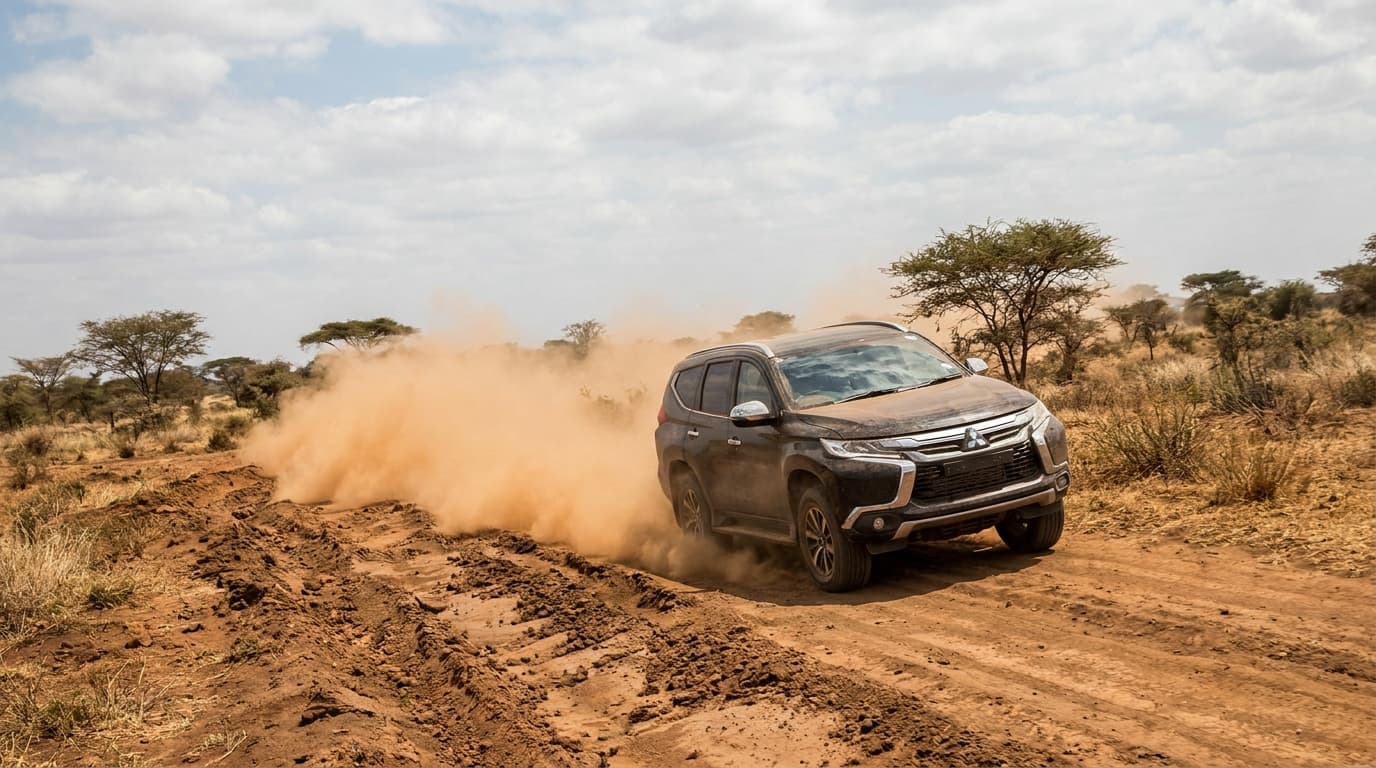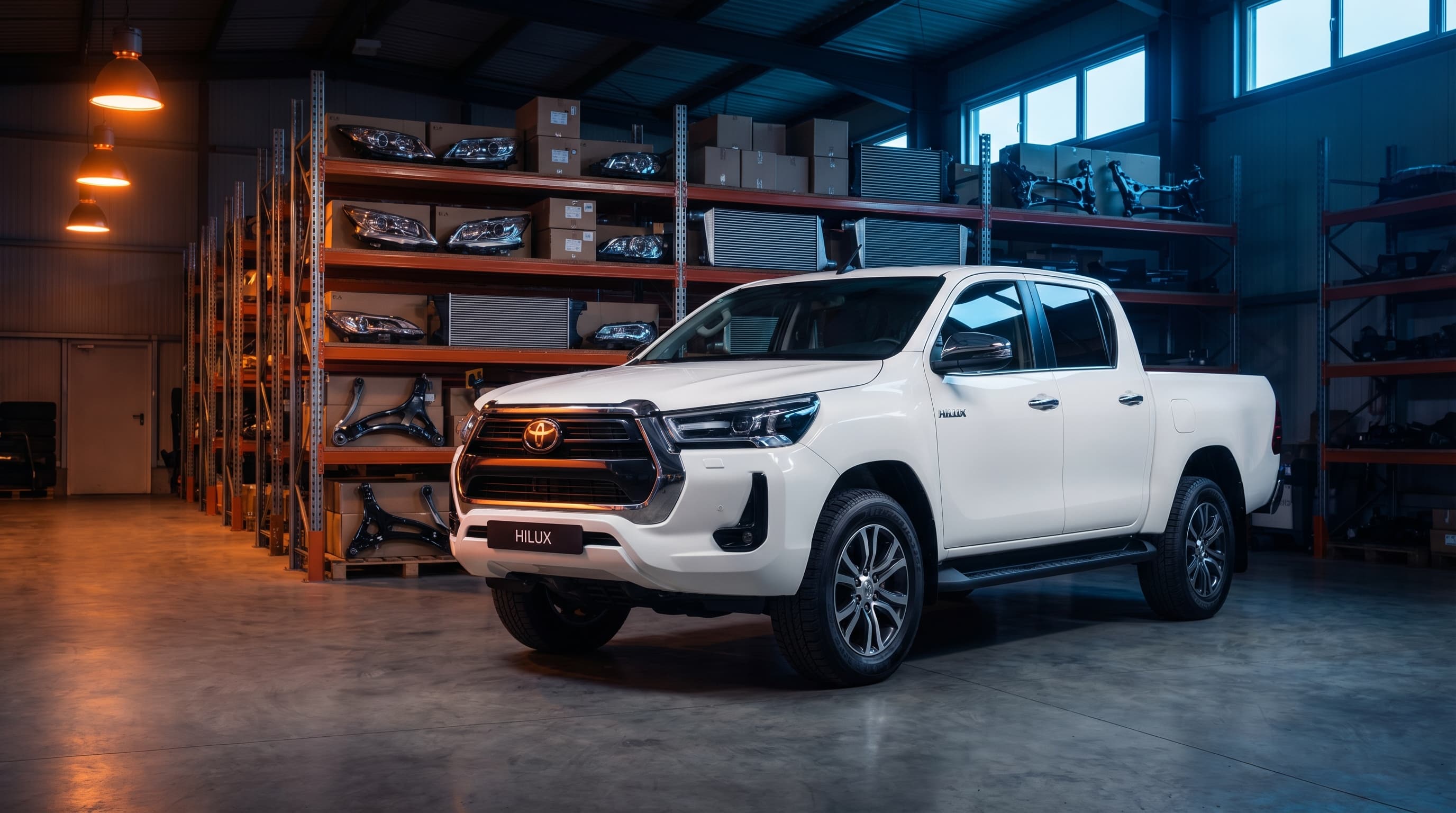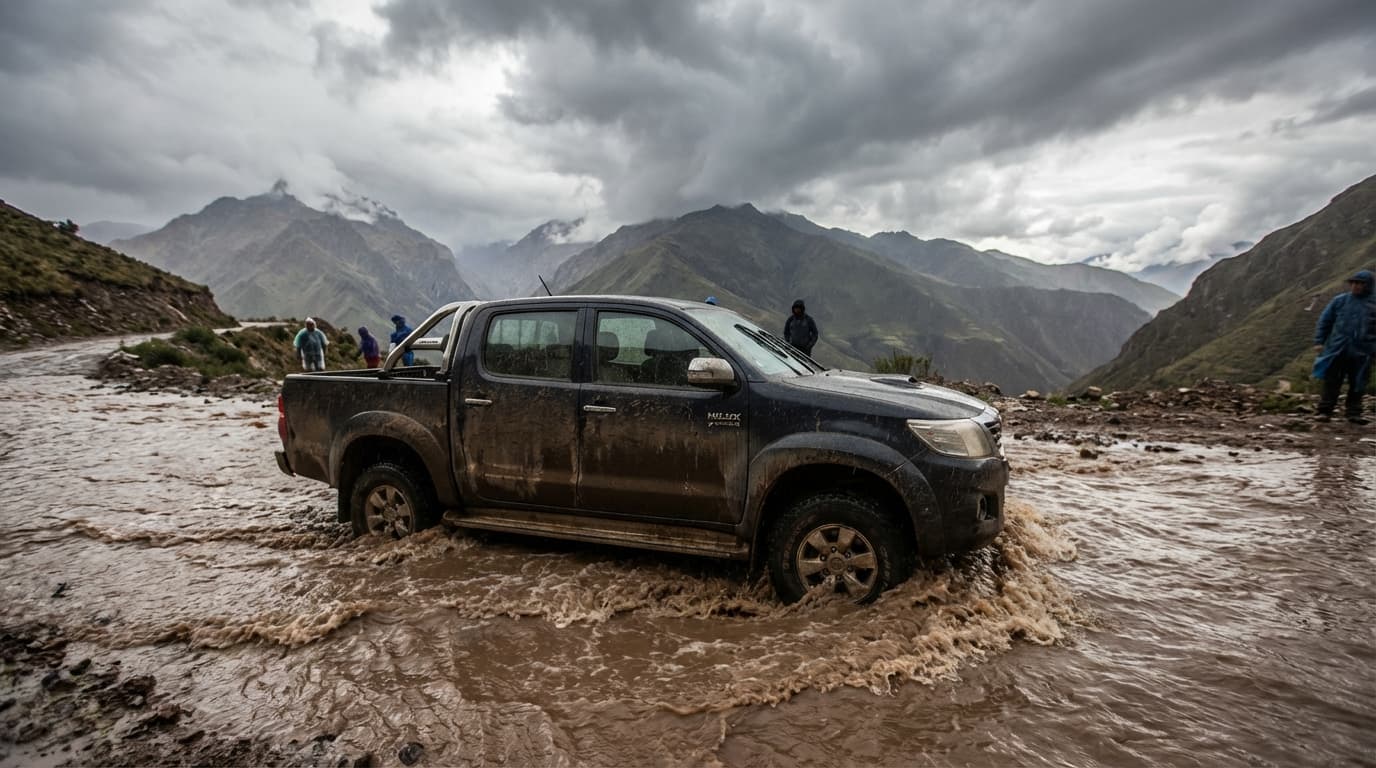
Workshops in Arequipa and Piura were already backed up before the flood alerts cleared. The first trucks started arriving within 48 hours of the water receding — Hilux GUN125s from mine-access roads and L200 KLs from rural distribution routes, most with visible water lines on the door sills. The pattern we've tracked across multiple disaster cycles is consistent: the parts that fail are predictable, the demand window lasts 6–8 weeks, and the distributors who had the right SKUs pre-positioned captured most of the margin.
This guide maps the failure sequence from first water contact to delayed-onset structural damage — what breaks in week one, what surfaces in week six, and how to compress your sourcing timeline when the normal procurement logic doesn't fit the situation.
What the 2026 Peru and 2025 Ecuador Floods Mean for Parts Demand
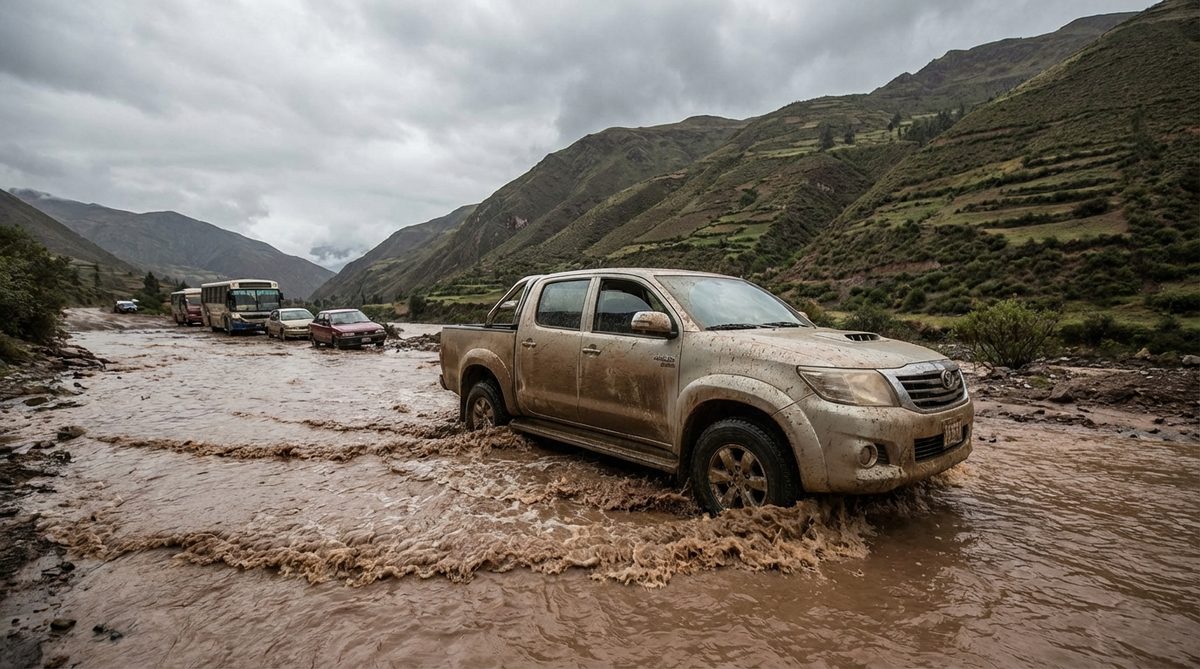
Peru declared emergency status across hundreds of districts in February and March 2026, with 931 kilometers of road network damaged — particularly concentrated in the Arequipa mining corridor and the northern coastal valleys (Source: Instituto Nacional de Defensa Civil — INDECI, Emergency Bulletins Q1 2026). Ecuador's flooding in 2025 — eight provinces under emergency declaration, over 12,300 people displaced from affected areas — created a regional demand spike whose second wave we're still tracking through reorder patterns from regional distributors (Source: Servicio Nacional de Gestión de Riesgos y Emergencias — SNGRE, Ecuador 2025 Emergency Reports).
The vehicles hit hardest are exactly the ones that dominate these markets. Toyota Hilux accounts for over 80% of Peru's commercial fleet segment (Source: JIAWEI 4x4 distributor network data, 2023–2025), and the L200 has been one of the top-selling pickups in Chile and Ecuador in recent years. Combined, these two platforms represent the overwhelming majority of flood-damaged trucks entering repair workshops right now.
What makes disaster repair structurally different from routine maintenance is the compression. A regional distributor selling 15–20 headlight assemblies per month will see 50–60 orders in 10 days after a major flood — concentrated in a small number of SKUs, with buyers who need answers in hours rather than the usual turnaround. Availability becomes the product. Margin is secondary. The distributor who was stocked wins. The one who has to back-order loses the account to whoever picks up first.
Demand Timeline
Plan for two distinct waves. The first (0–2 weeks post-flood) is urgent functional damage — lighting, filtration, radiators, immediate electrical failures. The second (2–8 weeks) is delayed-onset mechanical degradation: rubber deterioration, advancing corrosion, glazed brakes. If you only stock for the first wave, you'll be scrambling when the second one arrives.
The Flood Damage Sequence: How Water Destroys a 4x4
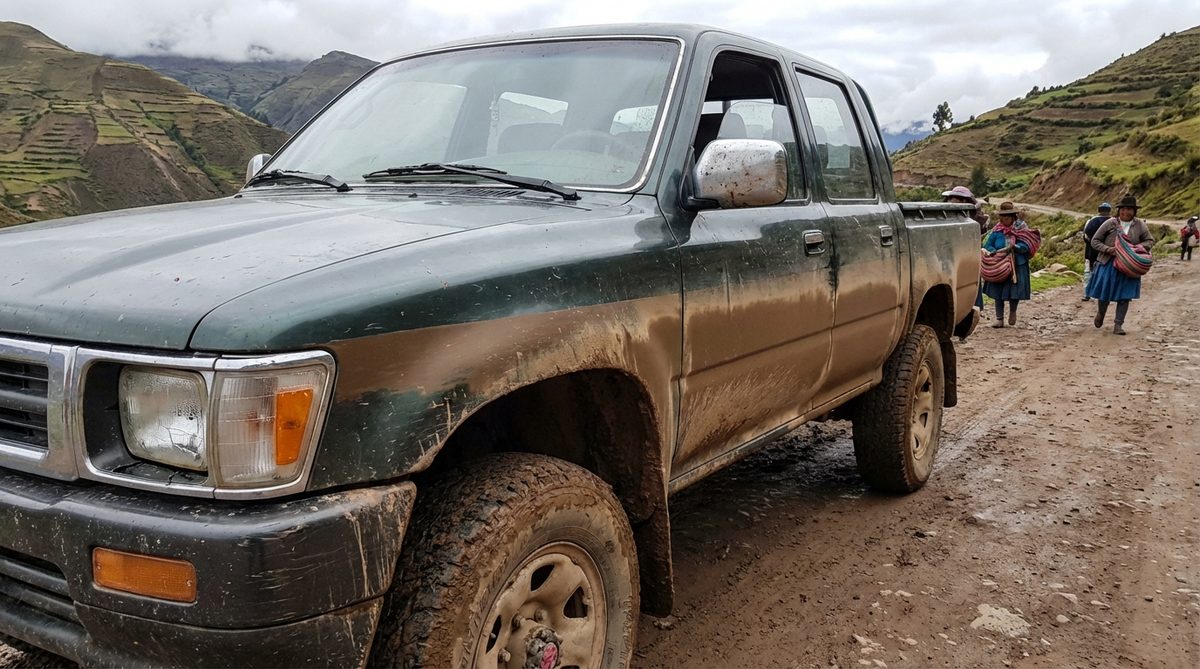
Water depth at the point of submersion determines the damage profile more than duration. The following breakdown is based on post-flood claim patterns and workshop feedback from our distributor accounts across Peru, Ecuador, and Chile.
Under 30 cm — Splash Zone
The vehicle drove through it; no significant submersion. Primary risk is water intrusion into low-mounted electrical connectors — ABS wheel speed sensors, oxygen sensors, reverse camera connectors. Damage rarely shows up immediately. It surfaces 3–5 weeks later as unprotected contacts corrode and start triggering warning lights or intermittent faults.
30–60 cm — Underbody Submersion
Everything below the frame rail is wet. Air filter exposure becomes likely — check the GUN125 air intake routing, which is vulnerable above approximately 40 cm. Tail lights submerge at this range. Suspension and drivetrain components are saturated, and grease begins washing from unprotected joints. Brake fluid contamination is possible if a caliper bleed nipple was cracked or the reservoir vented while hot.
Over 60 cm — Partial or Full Cabin Entry
Headlights submerged. Radiator took debris impact or sediment blockage. Interior flooding triggers wiring loom issues that may not manifest for weeks. In the Andean high-altitude context — the Arequipa basin sits above 2,000 meters — flood water carries significant suspended silica and mineral particulates. These are abrasive to rubber seals and more corrosive to aluminum cooling components than lowland coastal flood water — corrosion timelines we track from Arequipa accounts run roughly half those of equivalent coastal events.
Mud vs. Moving Water vs. Standing Water
Moving water with suspended sediment (the dominant pattern in Andean floods) is more damaging than standing water because abrasives are forced into gaps under kinetic pressure. Standing water causes longer saturation but less mechanical abrasion. Mud introduces sulfates and organic bacteria that accelerate rubber compound degradation — L200 control arm bushings on trucks recovered from mud events consistently fail faster than those from clean-water events in our warranty return analysis.
Tier-1 Parts: What Workshops Replace Within 2 Weeks
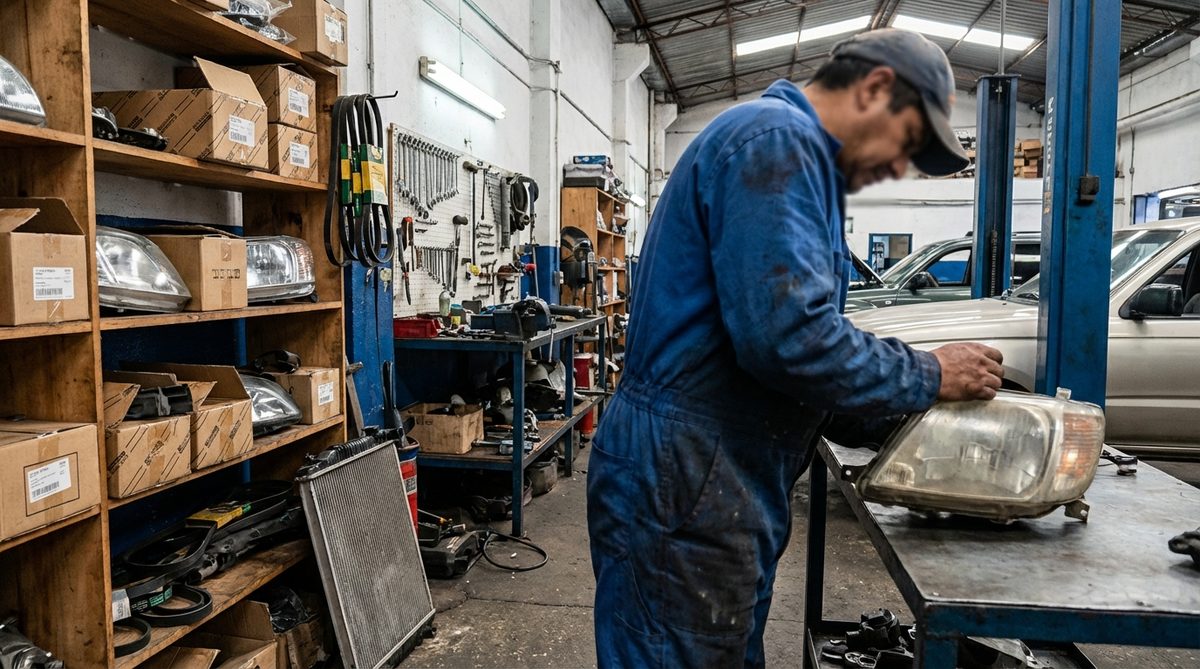
These are the parts that present with visible, immediate failure — the jobs arriving at the workshop in the first 10–14 days after a flood. Every distributor in or adjacent to an affected area needs these stocked before the trucks arrive.
| Part | Failure Mechanism | GUN125/126 OE# | L200 KL OE# | Urgency |
|---|---|---|---|---|
| Air Filter Assembly | Mud/water saturation, blocked media | 17801-0C010 [verify EPC] | 1500A029 [verify EPC] | Immediate |
| Front Headlight L/H | Water ingress, lens fogging, connector short | 81110-0K270 [verify EPC] | 8301C484 [verify EPC] | Immediate |
| Front Headlight R/H | Water ingress, lens fogging, connector short | 81150-0K270 [verify EPC] | 8301C485 [verify EPC] | Immediate |
| Tail Light L/H | Submersion, seal failure, internal corrosion | 81560-0K210 [verify EPC] | 8330C017 [verify EPC] | Immediate |
| Tail Light R/H | Submersion, seal failure, internal corrosion | 81550-0K210 [verify EPC] | 8330C016 [verify EPC] | Immediate |
| Radiator Assembly | Debris impact, sediment blockage, fin collapse | 16400-0L110 / 16400-0L120 [verify EPC] | 1350A373 [verify EPC] | Immediate |
| Oxygen / Lambda Sensor | Moisture-induced corrosion on electrical contact | 89465-0K170 [verify EPC] | 1588A136 [verify EPC] | 1–2 weeks |
Why Lighting Fails So Predictably
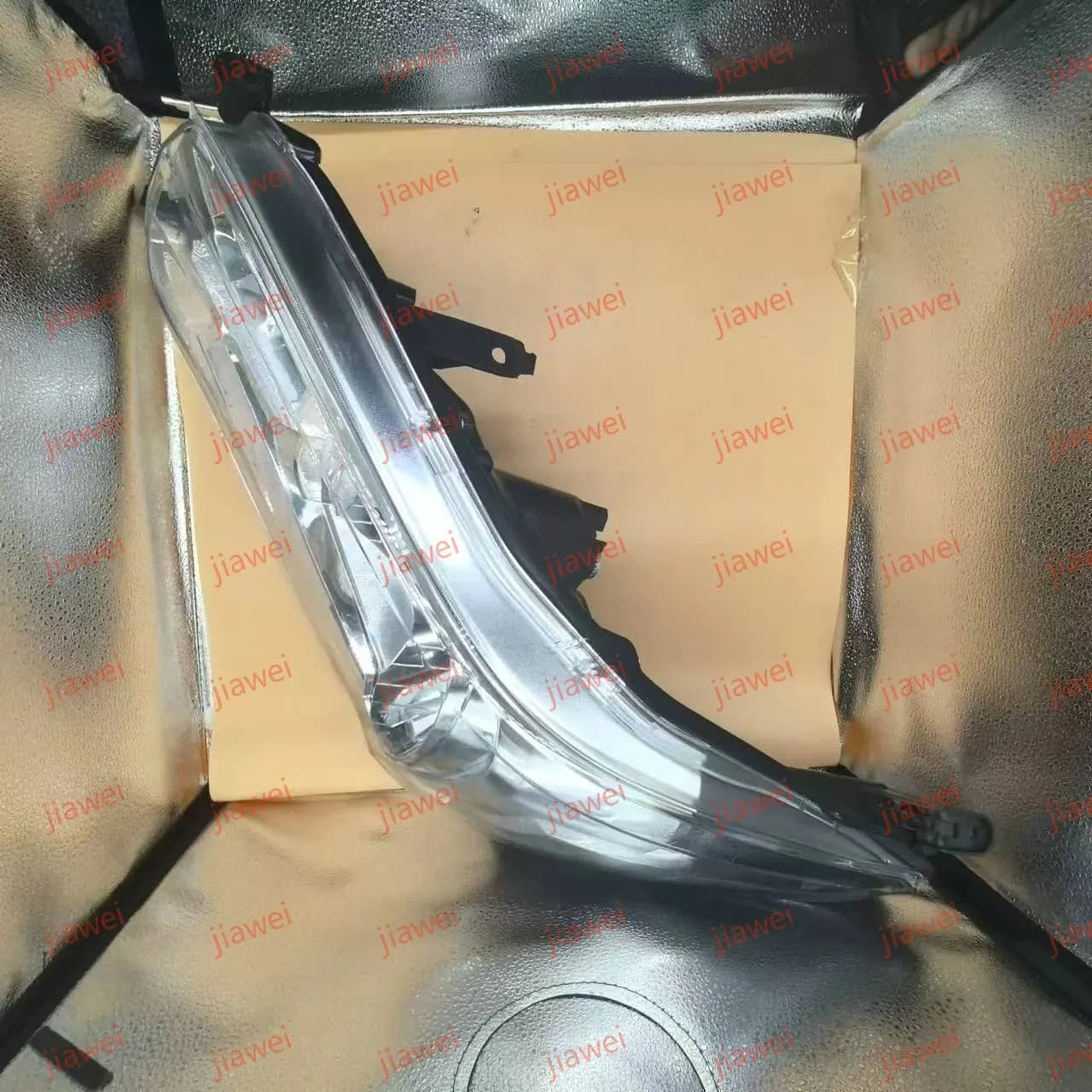
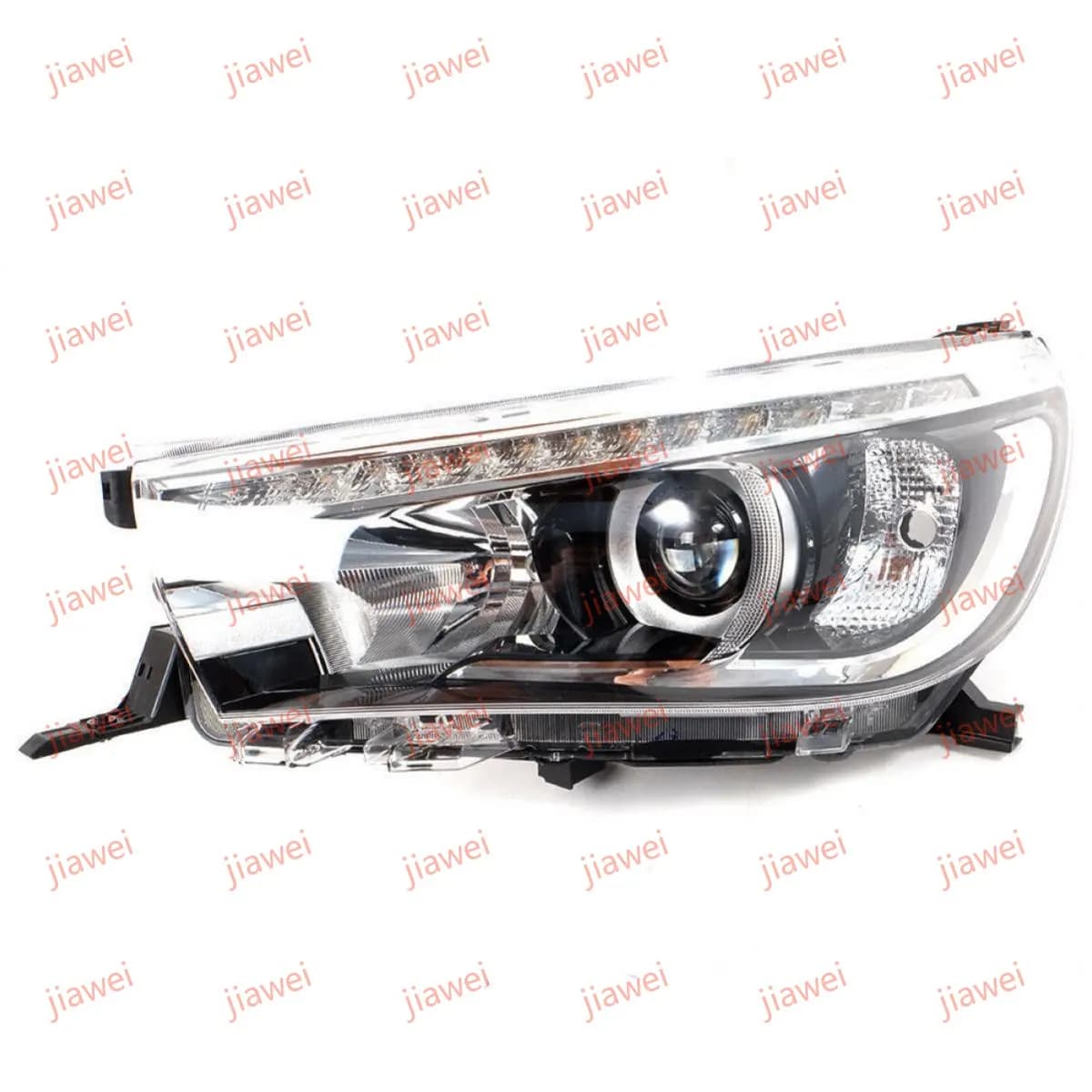
The GUN125 headlight housing is rated IP67 from factory. The front assemblies (81110-0K270 LH / 81150-0K270 RH [verify EPC]) are the highest-demand item in any flood-response stock position — browse GUN125 and L200 KL headlight assemblies in our catalog. But once the factory seal ages or develops micro-cracks from road vibration, submersion at any depth allows moisture ingress. The internal reflective coating oxidizes within days of water contact, and by the time the truck reaches the workshop, beam geometry is already compromised. There is no "dry it out and reinstall" — the reflector coating doesn't recover. Replace the assembly.
The L200 KL headlights present a specific second-failure point: the LED DRL module uses a separate power management circuit that corrodes faster than the main halogen bulb circuit. If the DRL is dead but the main beam still functions, the power module is usually the culprit — but in post-flood conditions, replacing the full assembly is the correct call for long-term durability. A workshop that patches the module risks a callback in 45 days.
Need these OE numbers verified for your stock? Send us the chassis codes and quantities from your affected-area accounts — we'll confirm availability and current lead times within 48 hours. Request emergency parts verification →
Tier-2 Parts: What Surfaces 2–6 Weeks Later
This is the second demand wave. It catches distributors off guard because the failure mechanism is delayed — rubber degrades post-submersion, corrosion advances on contacts that were never fully dried, and brake surfaces develop accelerated wear from residual abrasive grit that embedded during the flood event.
Suspension Bushings (2–4 Weeks)
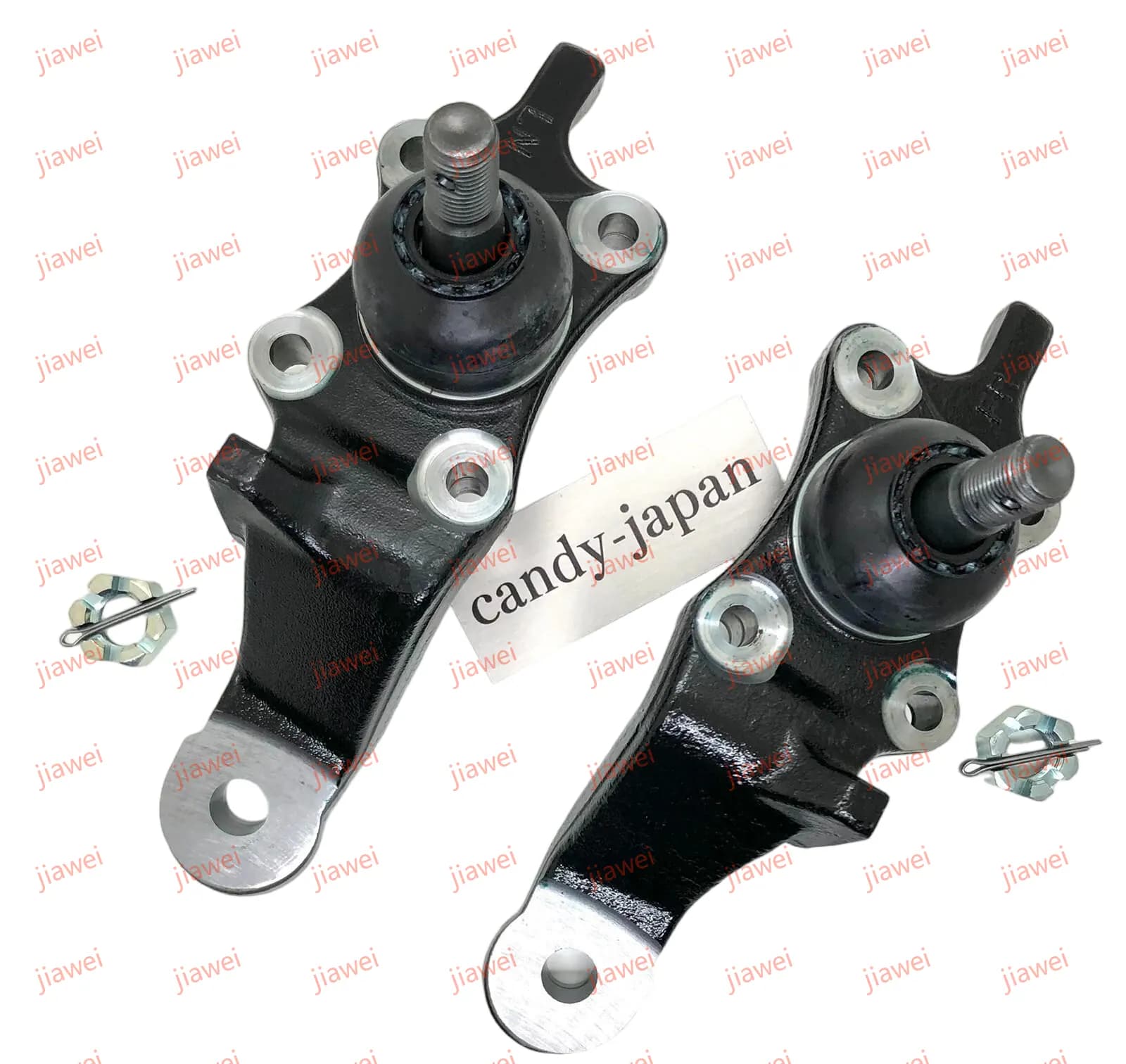
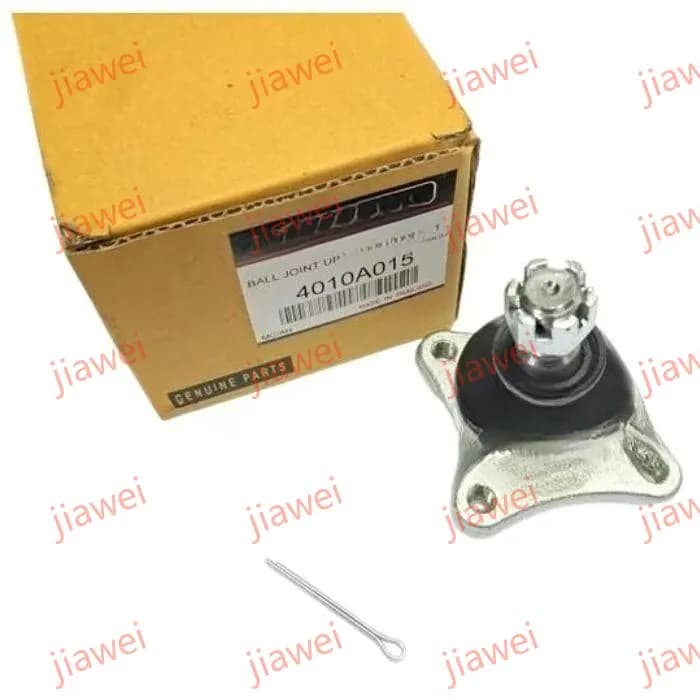
Natural rubber bushings absorb water during submersion. As the vehicle returns to daily use, the rubber undergoes repeated thermal cycles — warm engine bay at altitude, cold nights in the Andes — which accelerates micro-cracking in the already-saturated compound. The resulting play and vibration typically presents at 3–4 weeks post-flood. Polyurethane bushings degrade more slowly in wet conditions, but the majority of the GUN125 and L200 KL aftermarket is natural rubber, which is what you'll be replacing. Stock front lower control arm bushings in depth — they are consistently the highest-volume item in this category after a flood event.
Brake Discs and Pads (3–6 Weeks)
Surface rust forms immediately on brake discs after submersion, but it typically clears within a few normal braking cycles. The more lasting problem is pad glazing from repeated braking with mud-contaminated rotors in the days immediately after the flood — before the owner brings the truck in for service. Workshop accounts in Arequipa and Piura report that trucks driven for 2–3 weeks post-flood with grit-contaminated rotor surfaces wear through brake pads approximately 40% faster than normal (Source: JIAWEI 4x4 distributor feedback, Peru network, 2023–2025). Stock brake disc and pad sets together — by week four, customers rarely come in for one without needing the other.
CV Boots and Axle Boots (2–5 Weeks)
Flood sediment is abrasive to rubber. Micro-tears from grit exposure allow grease to escape and water to enter the constant-velocity joint. The failure is progressive and invisible — the joint looks intact from outside — but the customer will return with drivetrain vibration on acceleration within 4–5 weeks. This is a high-volume, low-drama replacement: fast to install, relatively inexpensive, high customer satisfaction. Stock accordingly.
Tie Rods and Steering Linkages (3–8 Weeks)
The Arequipa mining corridor sits above 2,000 meters, and Andean groundwater carries elevated mineral and sulfate content. Submersion in mineral-rich water — more common in upland flood events than coastal flooding — accelerates galvanic corrosion on steel steering components 2–3× faster than equivalent coastal flood exposure, based on corrosion-related warranty claims from our Arequipa distributor accounts. The failure pattern typically begins at thread engagement points on the tie rod ends, presenting as looseness flagged at inspection rather than visible physical damage. These come back as "didn't pass roadworthiness check" rather than acute failures, which is why they show up at weeks four through eight rather than week one.
| Part | Onset Timing | Failure Signal | Stocking Note |
|---|---|---|---|
| Control Arm Bushings | 2–4 weeks | Vibration, clunking on rough road | Stock front lower set; highest volume |
| Brake Disc + Pad Set | 3–6 weeks | Pulsation, extended stopping distance | Stock as a bundle — never just pads |
| CV Boot Kit | 2–5 weeks | Vibration on acceleration, grease throw | Inexpensive; high turnover rate |
| Outer Tie Rod End | 4–8 weeks | Steering play, inspection failure | Mineral-water corrosion; stock for Andes region |
Emergency Sourcing: How to Get Parts Faster After a Disaster
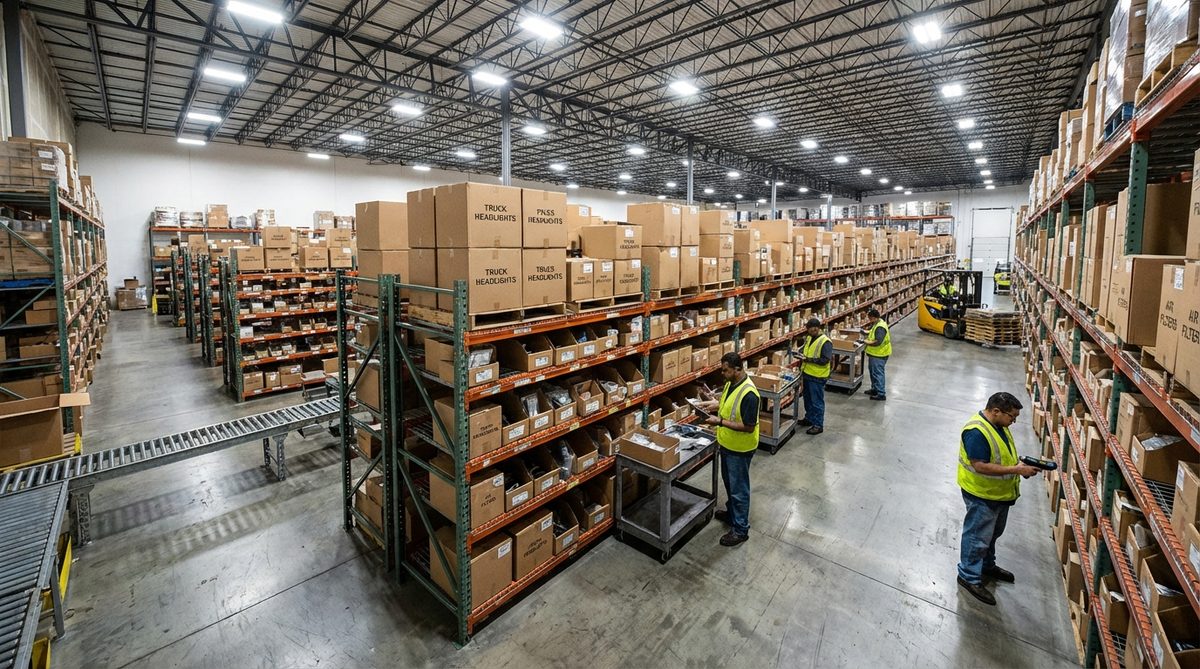
Normal procurement logic breaks down in the disaster window. Lead times are compressed, communication channels are overloaded, and the buyers who move fastest get the stock. Here's what actually works:
Pre-Position Before the Trucks Arrive
The single most effective approach is having Tier-1 SKUs in a regional warehouse before the repair wave peaks. That means either holding local stock or knowing in advance which suppliers can turn a same-day confirm into a 5-day air shipment. A regional distributor who positions 20 units of GUN125 headlights, 10 radiators, and 30 air filter sets before the workshop rush starts will move all of it in a week and have zero back-order calls. The capital cost is real; the alternative is losing the accounts to whoever was stocked.
Bundle Your Inquiry — Don't Piece It Out
The largest time-waster in emergency procurement is single-item RFQs. One comprehensive message — vehicle model, chassis code, OE number, quantity for every part on your list — compresses three days of back-and-forth into one exchange. Include the VIN range or chassis code list if you have it; it eliminates the "which version of this headlight" clarification entirely. We've consistently seen buyers cut their procurement cycle from 72 hours to under 8 hours by consolidating. If you don't have OE numbers for everything, send model + year + damaged part description — a competent supplier should be able to identify the correct number for you.
China Direct vs. Regional Warehouse — Where the Math Changes
For parts not already stocked in a regional warehouse, air freight from Guangzhou to Lima runs 5–8 business days door-to-door, including customs clearance at Jorge Chávez. Freight cost is roughly 4–6x sea freight per kilogram. The economic breakeven — the point where air freight premium is covered by avoided lost sales from backorders — sits at approximately USD 200–400 in parts value per shipment for most LATAM markets. Below that threshold, find a regional distributor with existing stock. Above it, air freight almost always wins during the disaster window. For high-value, low-weight items like headlight assemblies and sensors, the calculus almost always favors air — a pair of GUN125 headlights weighs under 8 kg and has more value per kilo than any sea freight scenario can justify.
Communicate Urgency Specifically
When you contact a supplier, say "flood-emergency restock, affected area" explicitly. It's not a manipulation — it's context that changes how the supplier allocates warehouse stock and expedite capacity. Suppliers who work the disaster-response market know this window matters and will prioritize accordingly. Generic "urgent" labels on emails get ignored; "emergency restocking for 300+ flood-damaged vehicles in Piura" does not. In our experience, including the district name and approximate vehicle count in the first line of an inquiry cuts internal triage time from 4 hours to under 30 minutes — and gets your request into the right quote queue immediately.
Quality vs. Speed: Where to Hold the Line
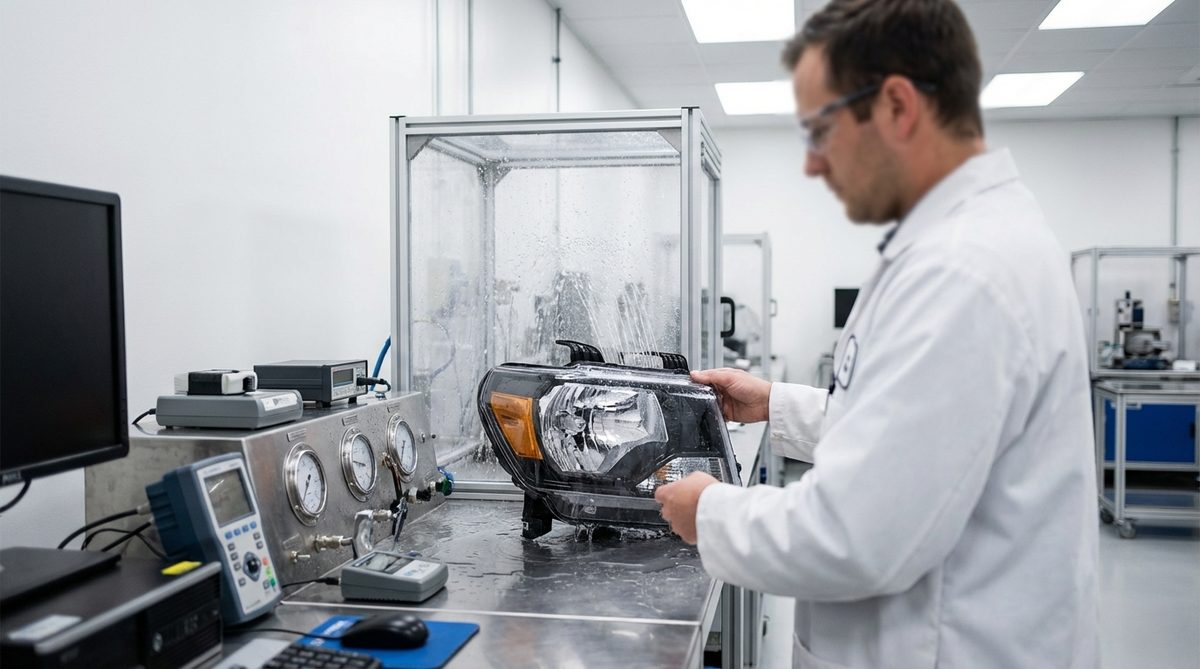
Disaster conditions create pressure to accept whatever arrives fastest. Here's where that calculus works in your favor — and where it will cost you twice.
Electrical Parts: No Compromise
Headlights, tail lights, oxygen sensors, and wiring harnesses installed in flood-damaged trucks are immediately exposed to residual moisture in door cavities, under-dash voids, and frame rails. A headlight assembly with marginal sealing will fail again within 60 days in this environment — the customer comes back, you replace it at your cost, and you've lost margin on the transaction twice while also losing a repeat account. Specify IP67-rated assemblies for all lighting going into post-flood repairs. This rating (defined under IEC 60529) means the seal is designed for 30-minute submersion at one meter — the minimum credible threshold for a vehicle that has already been flooded. Our GUN125 and L200 KL headlight assemblies are sourced to this standard.
Mechanical Parts: OE-Matched is Sufficient
For suspension bushings, brake sets, and CV boots, a correctly-specified OE-matched aftermarket part performs adequately in post-flood conditions. You don't need OEM pricing here. The quality floor is: correct rubber hardness (Shore A 55–65 for most GUN125/L200 KL control arm bushings) and dimensions that cross-reference correctly to the OE part number. Parts sourced to OE reference will hold up under the repeated thermal cycles and abrasive conditions typical of post-flood use — the failure mode we see is almost always incorrect specification, not aftermarket origin.
| Quality Tier | Key Spec | Best For | Price Band |
|---|---|---|---|
| OE-Matched Aftermarket | OE-referenced dimensions; IP67-rated seals for lighting; Shore A 55–65 rubber for bushings; cross-referenced to OE part number | Standard post-flood repair; most LATAM distributors; quality-conscious workshops — what we supply | Mid-range — contact for pricing |
| Economy / Budget | Unverified dimensions and material grades; sealing standard not confirmed | Not recommended for electrical parts post-flood. Higher callback risk on mechanical items. We don't stock this tier. | Budget |
Frequently Asked Questions
After submersion, how soon does the air filter need to be replaced?
Within 24 hours of the vehicle returning to road use. If the truck drove through water above 30 cm and the air intake is not a high-clearance snorkel type, assume the filter media is saturated or mud-contaminated. A blocked filter on the 1GD-FTV (GUN125) or 4N15 (L200 KL) creates intake restriction that can damage the turbocharger on the next hard acceleration. Don't wait for a warning light — the light won't come on until the damage is already in progress. Replace proactively. (Hilux GUN125: 17801-0C010 [verify EPC]; L200 KL: 1500A029 [verify EPC])
How many headlight versions exist for the GUN125 — and which OE number do I order?
The GUN125 headlight has at minimum two distinct assemblies: the pre-2021 halogen version and the post-2021 facelift version (with updated DRL styling). Some market variants also have a full-LED option that differs from both. The wrong version will not connect to the vehicle's wiring harness correctly and will not seat into the mounting brackets. Always verify the production year from the VIN plate before ordering — the year code is in characters 10 of the 17-digit VIN. All OE numbers in this article are marked [verify against EPC] for this reason.
How fast can parts arrive from China for an emergency order?
Air freight from Guangzhou to Lima runs 5–8 business days door-to-door under normal customs clearance. For emergency orders with complete documentation (commercial invoice, packing list, HS code pre-declared), clearance at Jorge Chávez typically runs 1–2 business days. We offer a 48-hour quote response for emergency inquiries and can confirm air freight availability on Tier-1 SKUs at the time of quoting. Contact us with your parts list to confirm current stock and lead times.
Does the L200 KL headlight come with an integrated DRL?
Yes. The 6th-generation L200 KL (2019–present) offers a halogen-main-beam-with-LED-DRL configuration and a full-LED configuration depending on the market variant and trim level. In the halogen version, the DRL module is a separately replaceable unit. In the full-LED version, the entire assembly is replaced as a single piece. The two versions are priced very differently — confirm the vehicle configuration before quoting. Ecuador and Peru market L200s are predominantly the halogen-plus-DRL variant, though full-LED units are common in fleet and premium trim purchases.
Can GUN125 and GUN126 exterior parts be substituted for each other?
For most exterior body and lighting components — bumpers, fenders, headlights, tail lights — yes, GUN125 and GUN126 are cross-compatible. Engine-bay and drivetrain components differ due to the different engine configurations (2.4L vs. 2.8L). For the post-flood Tier-1 parts covered in this article, compatibility is generally high, but always confirm against EPC for the specific year and market spec before committing to stock.
What is the minimum order quantity for emergency procurement?
For disaster-affected regions, we don't enforce standard MOQ on mixed OE lists. Send your complete parts list with vehicle model, chassis code, and quantity for each item — we'll quote line by line and flag what is in stock versus what requires production lead time. Emergency inquiries are handled separately from standard order queues.
Get Your Emergency Parts Quote in 48 Hours
If you're restocking for a flood-affected area, we've seen these demand cycles before. Send us your complete OE list — vehicle model, chassis code, and quantities — and we'll confirm availability, provide current pricing, and give you estimated delivery to your port. Tier-1 lighting, air filtration, and cooling components are prioritized for emergency inquiries.
Send your emergency parts list → | Browse Hilux & L200 parts by category →
Sources & Methodology
- Peru flood emergency data: Instituto Nacional de Defensa Civil (INDECI), Emergency Bulletins and Situation Reports, Q1 2026. Road damage figures (931 km) from INDECI Bulletin No. 12-2026.
- Ecuador flood data: Servicio Nacional de Gestión de Riesgos y Emergencias (SNGRE), 2025 Emergency Declaration Reports; 8-province emergency declaration, 12,300+ displaced persons figure from official SNGRE communiqué.
- OE part numbers: Toyota EPC and Mitsubishi EPC cross-reference databases. All numbers marked [verify against EPC] — confirm against current catalog before procurement. OE numbers can change with production runs and market variants.
- Demand and failure pattern data: JIAWEI 4x4 distributor network feedback, Peru and Ecuador accounts, 2023–2025 disaster-cycle analysis; workshop return data from Arequipa and Piura distribution accounts.
- Technical standards referenced: IEC 60529 (IP67 ingress protection), SAE J1383 (automotive lighting impact resistance), ECE R112 (headlamp photometric requirements), IATF 16949:2016 (automotive quality management systems), ISO 9001:2015.
- Brake wear data: Regional workshop feedback, Arequipa/Piura network, 2024–2025; described as distributor-reported patterns, not controlled study data.
This article was last reviewed on March 26, 2026. Market conditions and part availability are subject to change. OE numbers reflect catalog data at time of writing — always verify against current EPC before ordering. If you notice an inaccuracy, please report it here.