Maintenance TipsFebruary 24, 20261 min read
Monthly Tire and Suspension Checks for 4x4 Fleets
A simple monthly inspection routine to reduce uneven wear, steering complaints, and avoidable suspension replacements.
Direct takeaway
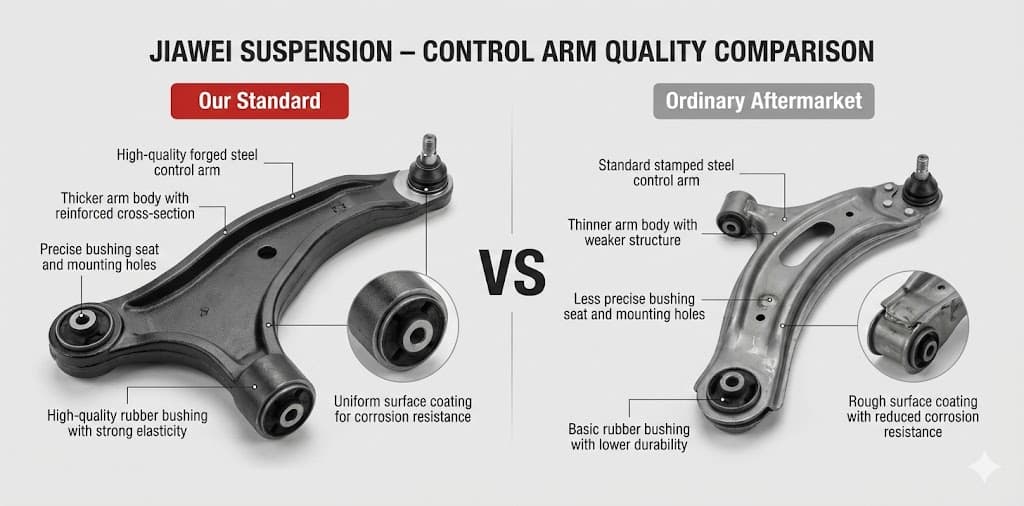
- Suspension guides should help buyers identify failure symptoms, replacement logic, and what to quote next.
- For B2B pages, maintenance advice works best when it links directly to the relevant OE-driven replacement parts.
- The most useful content explains when a symptom becomes a sourcing decision.
Why fleets lose money here
Tire wear and suspension degradation happen gradually, so teams often notice too late. A predictable monthly routine can prevent expensive secondary damage.
Monthly 20-minute checklist per vehicle
- Tire pressure cold-check and correction by load profile
- Look for irregular wear (inner or outer edge, cupping, feathering)
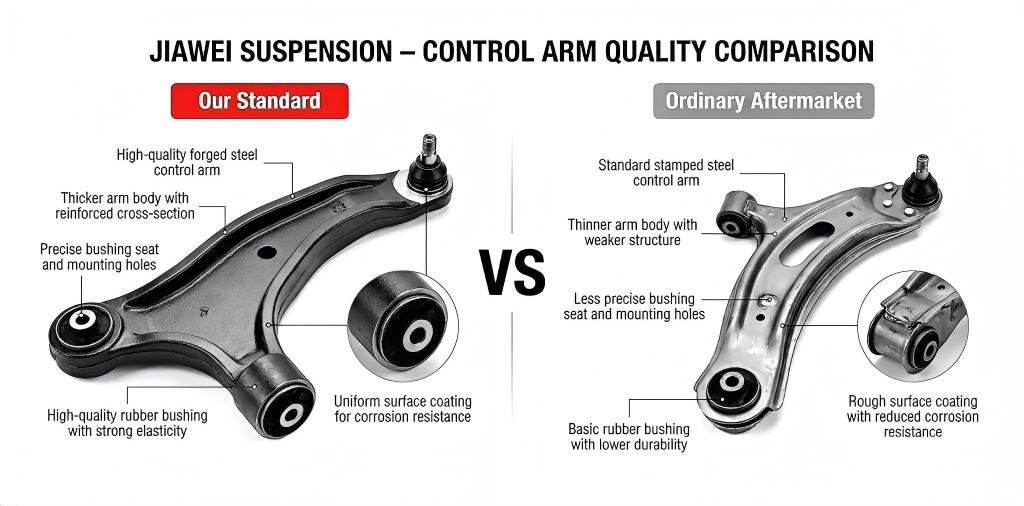
- Visual check of shocks, bushings, and ball-joint boots
- Steering feel test: pull, vibration, delayed return
When to escalate immediately
- Rapid single-edge tire wear
- Persistent steering pull after pressure correction
- Shock leakage or torn dust boots
- Noise when braking and turning at low speed
Procurement tip for workshops and distributors
For high-runner fleet models, keep bundled replacement sets (control arm plus ball joint plus hardware) to reduce downtime and repeated dismantling.
Sources
FAQ
When should a workshop move from diagnosis to RFQ on suspension parts?
Once the part family, model application, and failure point are clear, the workshop can quote by OE number or target replacement set.
Why connect maintenance content with replacement pages?
It shortens the path from diagnosis to RFQ and helps buyers compare the exact parts needed for the repair.